Guides
Patch Backing Types: Iron-On vs Sew-On vs Velcro vs Adhesive
By the Nation Patches team · Updated · 6 min read
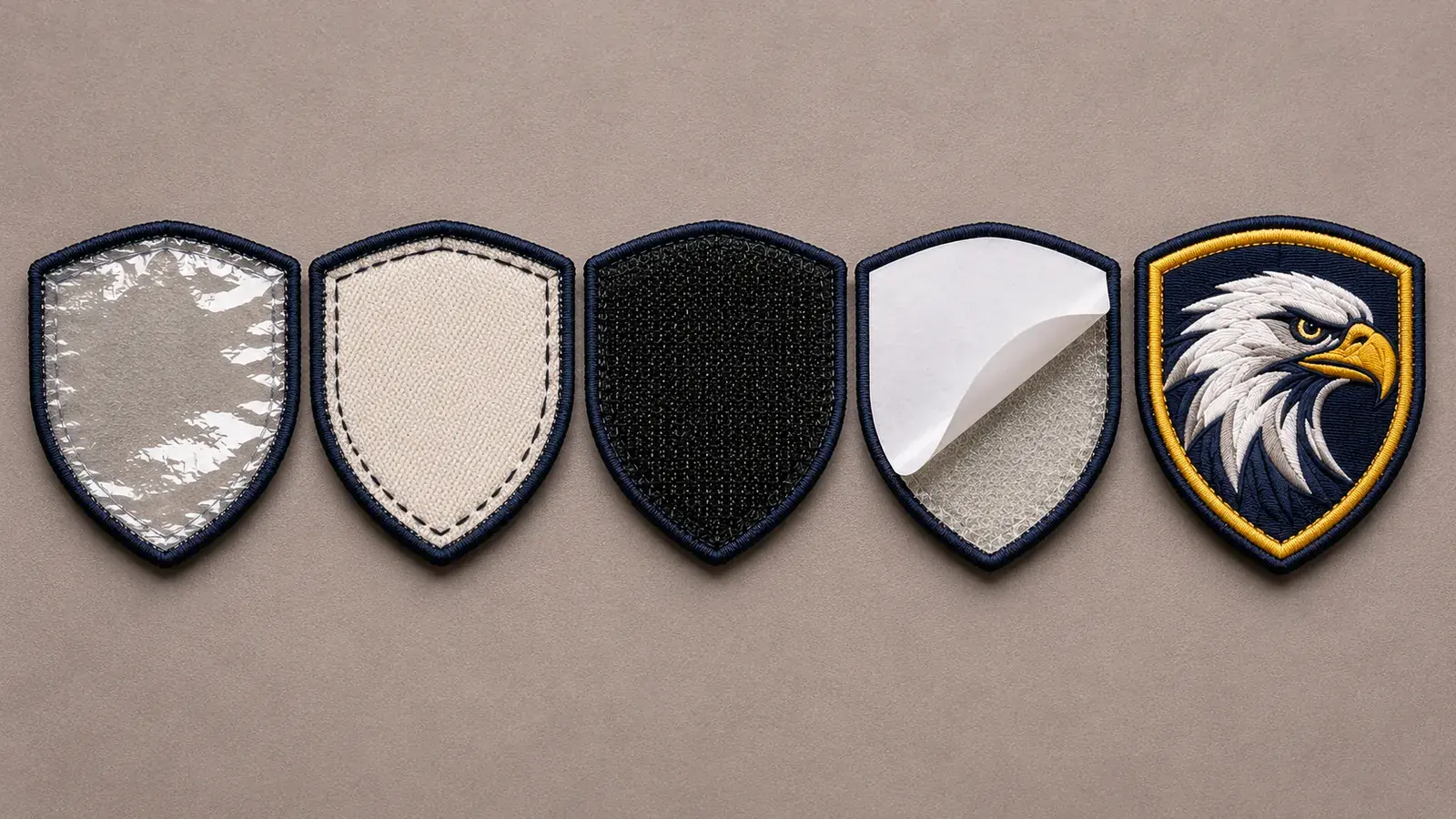
Iron on patch backing is a layer of heat-activated glue that bonds a patch to fabric under an iron or heat press. It's the most popular option, but it isn't always the best one. The right backing depends on the fabric, how often the item gets washed and whether you want to remove the patch later.
In short, sew-on is the most durable, iron-on is the quickest, Velcro lets you swap patches, and adhesive is for short-term use. Below, we compare every patch backing type so you can choose with confidence.
Patch Backing Types Compared
Iron on patch backing is only one of six common options. The table below shows how each one attaches and where it works best.
| Backing | How it attaches | Permanence | Best for | Watch out for |
|---|---|---|---|---|
| Sew-on (no backing) | Stitched by hand or machine | Permanent | Uniforms, leather, frequent washing | Takes time and some skill |
| Iron-on (heat seal) | Heat and pressure melt the glue | Semi-permanent | Cotton, denim, canvas, hats | Not for heat-sensitive fabrics |
| Velcro (hook and loop) | Hook side grips a loop panel | Removable | Tactical gear, uniforms, bags | Needs a loop panel on the item |
| Adhesive (peel and stick) | Pressure-sensitive glue | Temporary | Events, name badges, one-day use | Not washable |
| Magnetic | Magnet plate behind the fabric | Removable | Uniforms where holes aren't allowed | Ask if offered for your patch type |
| Pin or clutch back | Metal post through the fabric | Removable | Lapels, lanyards, PVC patches | Ask if offered for your patch type |
How Iron On Patch Backing Works
Iron-on backing is a thin sheet of thermoplastic adhesive, often called heat seal. At the factory, it's pressed onto the back of the patch. Later, when you apply heat and firm pressure, the glue melts and flows into the fabric fibers. Then it hardens again as it cools.
This works best on natural fibers that handle high heat. For example, cotton, denim, canvas and cotton-poly blends all bond well. However, nylon, rain shells, leather, silk and stretchy athletic wear are poor matches. The heat can scorch them, or the glue simply won't grip.
Need step-by-step help? Our guide on how to iron on patches covers heat settings, timing and fixes for peeling edges.
Iron On vs Sew On Patches: Which Is Better?
This is the most common question we hear. Iron on patch backing and plain sew-on backs both work well, but they suit different jobs. Here's how they compare on the points that matter most.
Durability
Sewn patches win here. Stitches don't soften in a hot dryer, and they survive years of washing. Iron-on patches hold well too, although edges can lift after many hot wash cycles.
Speed and ease
Iron-on is much faster. You only need an iron, a press cloth and about a minute per patch. Sewing takes longer, especially by hand on thick fabric.
Removal and repositioning
A sewn patch comes off cleanly once you cut the threads. In contrast, iron-on glue can leave a residue or a faint mark on the fabric.
Can you sew on an iron-on patch?
Yes, and many people do. The glue layer makes the patch stiffer, so use a sturdy needle and go slowly. Also, wipe the needle now and then if glue starts to build up.
Sew On Patches and Sewable Patches
Sew-on patches have no adhesive at all, just a clean fabric back. Because of that, they lie flat and feel soft. They are the standard choice for uniforms, leather vests and items that get washed often.
Any sewable patch with a merrowed border is easy to attach. The thick edge gives your needle a clear path, so the stitches hide inside the border. Heat-cut edges work too, but stitch just inside the satin edge. Our guide on how to sew on a patch shows both hand and machine methods.
Velcro (Hook and Loop) Backing
Hook-and-loop backing has two parts. The stiff hook side is sewn or bonded to the patch. The soft loop side sits on the garment, bag or gear. As a result, you can swap patches in seconds.
This is why Velcro-backed patches dominate tactical vests, plate carriers, backpacks and many uniforms. Remember that the item needs a loop panel, which is usually sewn on. You can explore options on our custom Velcro patches page.
Adhesive and Stick-On Patches
Adhesive patches use a pressure-sensitive glue under a peel-away paper liner. You peel, place and press. That makes stick-on patches handy for trade shows, races, name badges and kids' events.
However, an adhesive cloth patch is a short-term solution. The glue weakens in the wash and on rough fabric. If you want a no-sew option that lasts, use iron-on backing or a permanent fabric glue instead. Our guide on how to glue on patches explains how.
Magnetic and Pin Backs: Options to Ask About
Some projects need a backing outside the big four. For example, a magnetic back uses a magnet on the patch and a plate behind the fabric. It avoids holes, which suits uniforms and dress shirts. Keep strong magnets away from medical implants such as pacemakers.
A pin or clutch back works like a lapel pin, so it fits PVC patches, lanyards and hats. Not every backing suits every patch type or size. That's why it's best to ask our team what's possible for your design.
Which Backing for Which Fabric or Use
Use this table as a starting point. Then, check the care label on your garment, since heat limits matter most for iron on patch backing.
| Fabric or use | Best backing | Good alternative |
|---|---|---|
| Cotton T-shirts and hoodies | Iron-on | Sew-on |
| Denim jackets and jeans | Iron-on plus edge stitching | Sew-on |
| Leather vests and jackets | Sew-on | Ask about other options |
| Nylon backpacks and rain shells | Sew-on | Velcro with a sewn loop panel |
| Polyester and stretch athletic wear | Sew-on | Low-heat iron-on, test first |
| Tactical gear with loop panels | Velcro | Sew-on |
| Caps and trucker hats | Iron-on with a heat press | Sew-on |
| Work uniforms washed often | Sew-on | Velcro |
| Events and one-day badges | Adhesive | Pin back |
Choosing Iron On Patch Backing or Another Option
When you request a quote, tell us three things: the item, the fabric and how it will be cleaned. With that, we can recommend a backing and note it on your digital proof. You approve the proof before production starts.
Ordering patches for shirts, hats or bags? See our custom iron-on patches for details, or upload your design for a quote and ask our team about quantities and timing.
Frequently Asked Questions
What is iron on patch backing made of?
It's a thermoplastic adhesive film, usually called heat seal. It stays solid at room temperature. When heated, it melts into the fabric, and then it bonds as it cools.
Are sew-on or iron-on patches more durable?
Sew-on patches are more durable over time, especially with frequent washing. Iron-on patches hold well on cotton and denim. For the best of both, iron the patch on and add a few stitches around the edge.
Can you wash adhesive patches?
Generally, no. Peel-and-stick adhesive loosens in water and heat. Remove stick-on patches before washing, or choose iron-on or sew-on backing for anything that goes in the laundry.
Can I put an iron-on patch on polyester or nylon?
Polyester can work at a lower heat with a press cloth, but test a hidden spot first. Nylon often melts before the glue activates. For nylon, sewing or hook-and-loop is the safer choice.