Design Elements of Custom Fire Department Patches
A good fire company patch tells people who you are in one glance. However, many departments try to fit a full history onto a three-inch patch. As a result, the key details get lost in small stitches.
The Maltese cross
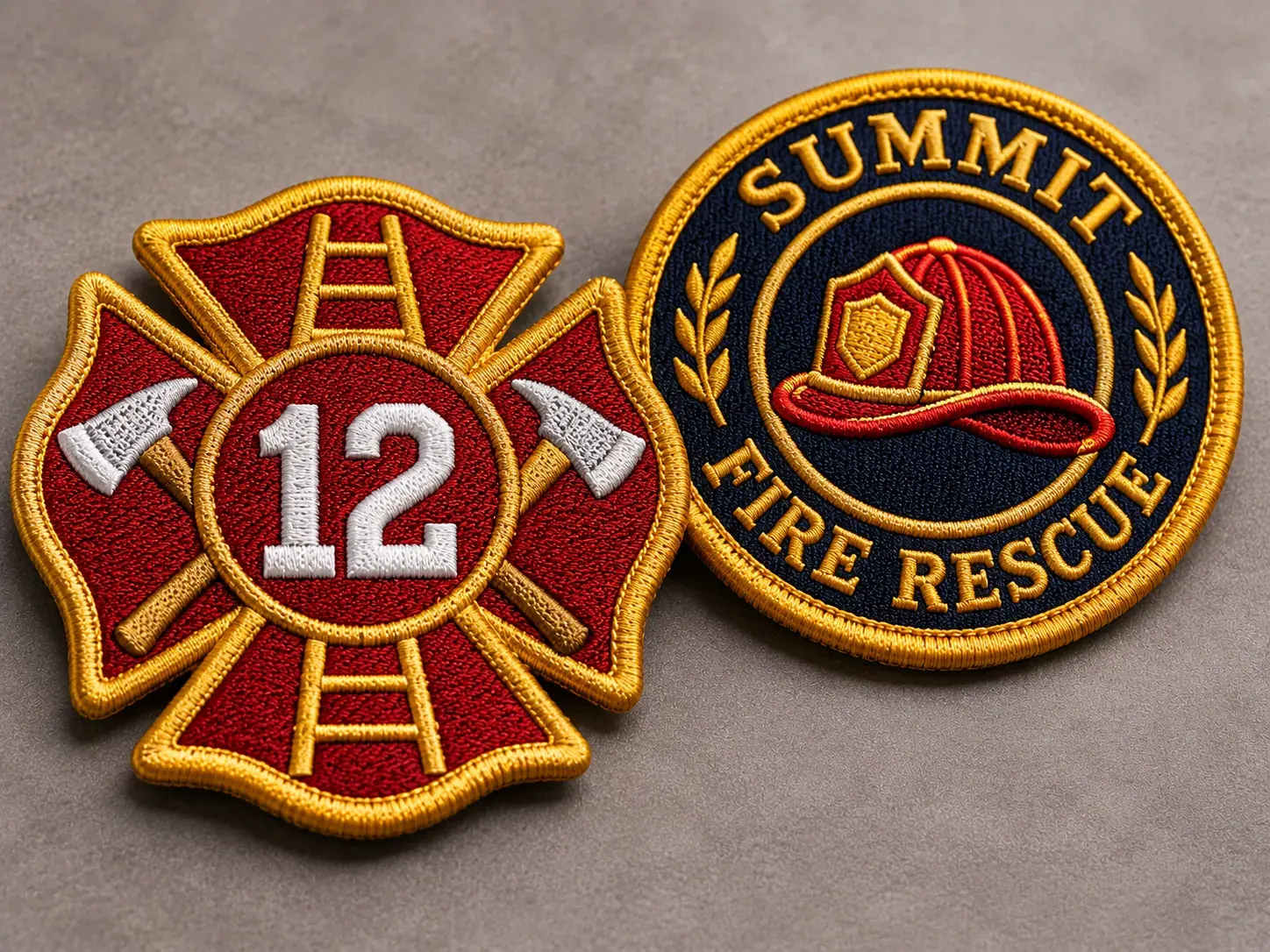
The Maltese cross is the most common fire service shape. Its four flared arms give you space for a number, a name and a central emblem. Also, a custom shape that follows the cross outline looks cleaner than a cross printed inside a circle.
Station and company numbers
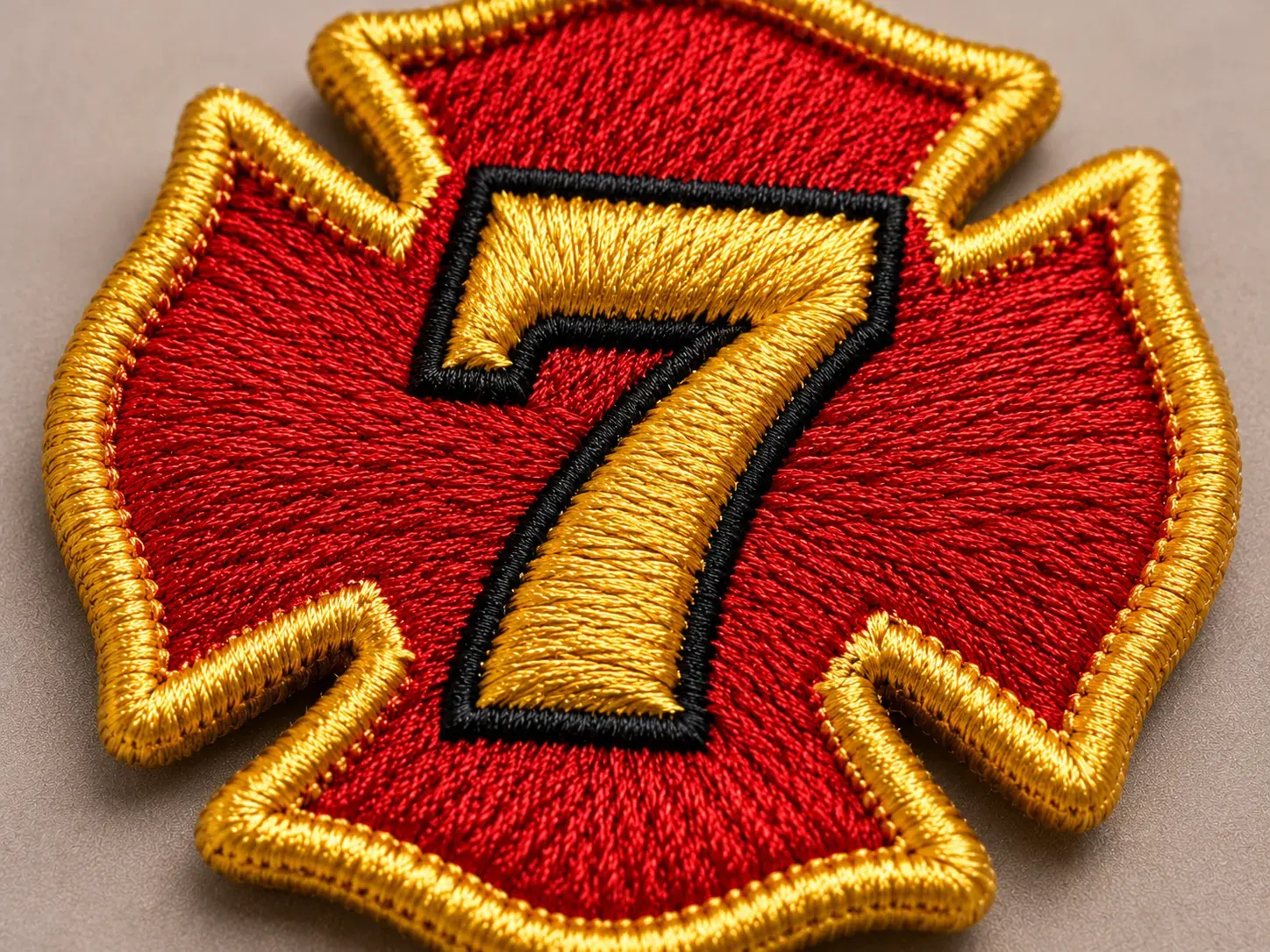
Numbers should be the boldest element on the patch. We suggest a thick block font with a contrasting outline, such as white on red with a black edge. That way the number still reads from across an apparatus bay.
Emblems and mottos
Ladders, hydrants, axes, helmets and engine silhouettes are all popular emblems. Mottos and founding years work best on an outer ring or a banner. Finally, keep any banner text to a few words so the letters stay tall enough to stitch.
Keeping Fire Dept Patches Readable
Embroidery has limits. Thread can't form letters much smaller than about a quarter inch without filling in. For that reason, we review small text on every proof and suggest changes when it won't hold up.
| Element | What works | What to avoid |
|---|---|---|
| Station number | Thick block digits with an outline | Thin script or italic numbers |
| City or district name | Uppercase sans-serif text on a ring | Long names in very small letters |
| Color contrast | Red, gold, black and white | Dark red text on a dark red base |
| Fine details | A woven patch for small lines | Tiny gear teeth in standard embroidery |
If your design has very fine lines, a woven patch uses thinner damask threads and holds more detail. On the other hand, embroidery gives a raised, classic look that most crews expect.
Patches for Firefighters, EMS and Rescue Units
Departments rarely order just one design. In addition to the main shoulder patch, many crews want patches for specialty teams and events.
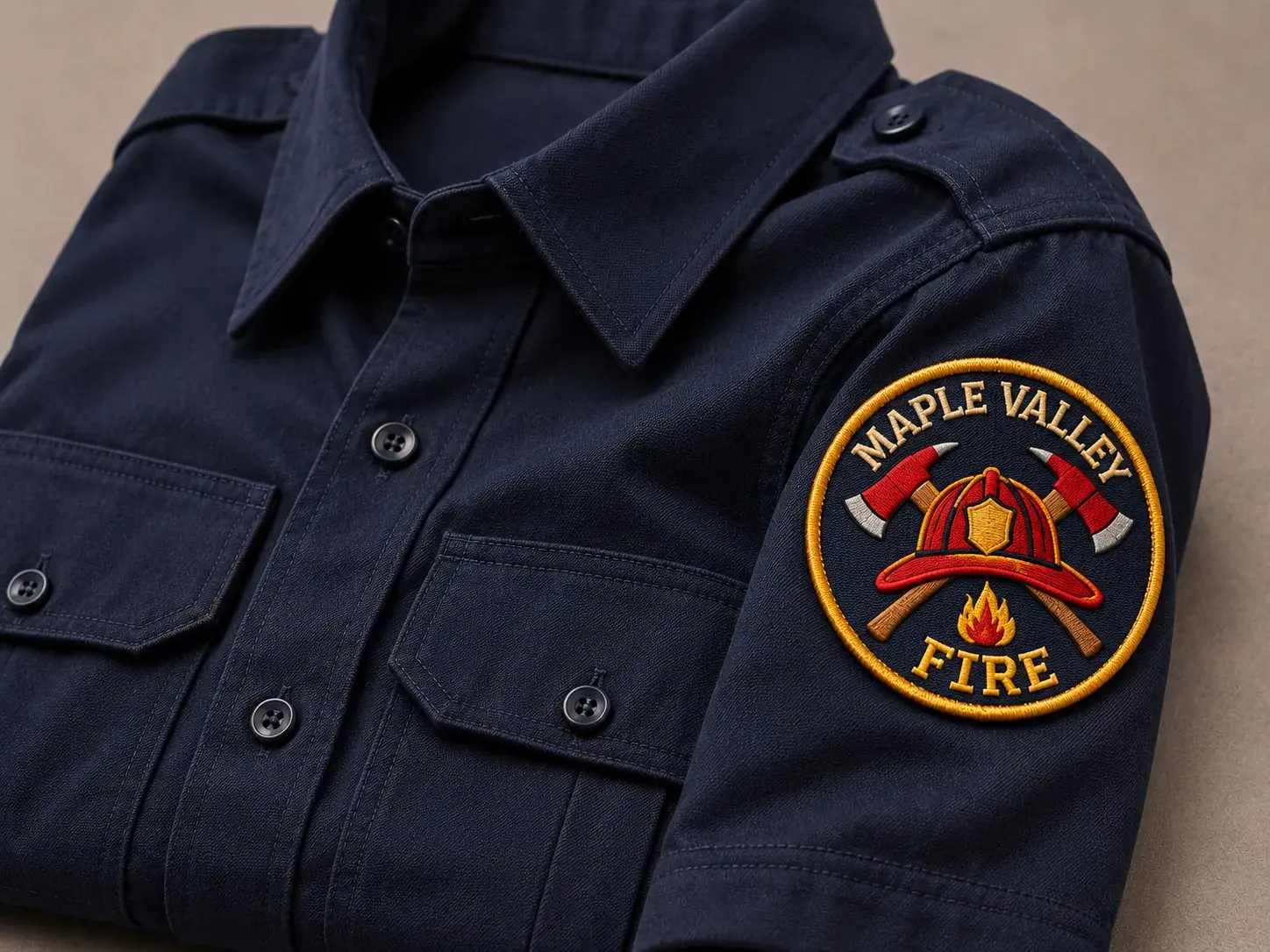
Station shoulder patches
The main sleeve patch for class A and class B shirts, usually sewn on with a merrowed border.
EMS and rescue patches
Custom EMS patches often feature a star of life with the agency name. Rescue units may add a rope or water emblem.
Specialty teams
Hazmat, wildland, technical rescue and dive teams often want their own design for job shirts and caps.
Memorial and anniversary patches
Commemorative patches honor a station's anniversary or a fallen member. Many crews also collect and trade them.
Volunteer companies also use patches for fundraisers, open houses and auxiliary members. Small custom hat patches work well on station caps.
A Note on Turnout Gear
Most crews wear their patches on station uniforms, job shirts, jackets and bags instead. These items don't face the same rules as protective gear. If you're unsure, ask your safety officer first.
Materials and Backing for Custom Fire Department Patches
Most fire department patches use polyester thread on a twill base. Polyester holds its color well through frequent washing. Meanwhile, rayon thread offers a brighter sheen for dress uniforms.
- Sew-on: the standard for uniform sleeves. It survives industrial laundering best.
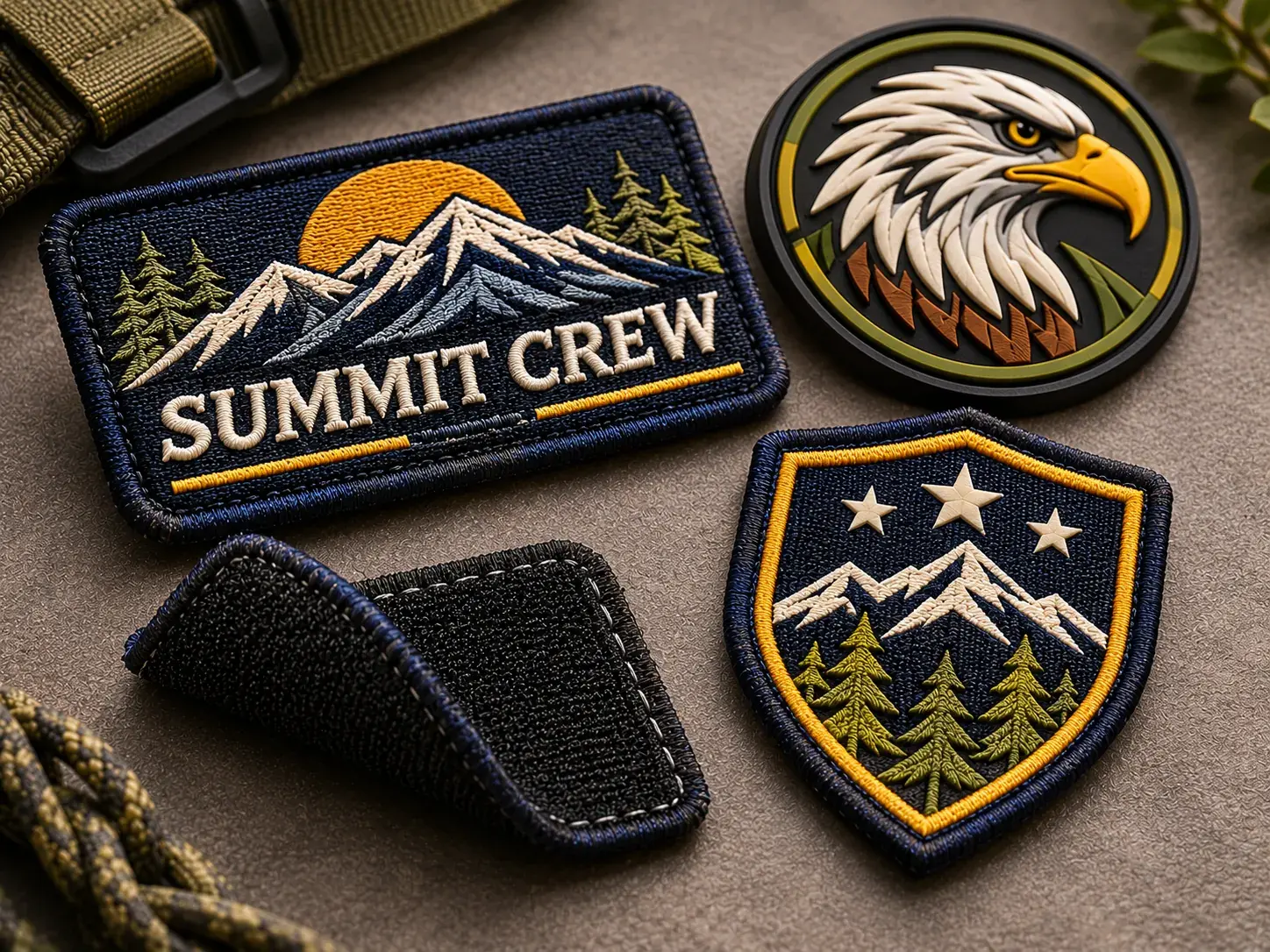
- Hook-and-loop: lets crew members move patches between job shirts and bags. See hook-and-loop backing.
- Heat-seal: fine for caps and casual wear, but sewing around the edge adds security.
PVC firefighter patches are another option for bags and gear. They shed water and wipe clean after a dirty call.
How We Check Every Batch
Before your custom fire department patches ship, we compare samples from the batch with the approved proof. We look at the station number first, because it's the detail people notice. Next, we check the cross points, since sharp tips are the first place a border can pull loose.
- Colors match the proof, especially reds, which vary widely between thread lines
- Text and numbers are complete, centered and free of gaps
- Borders and cut edges are sealed all the way around
- Backing is attached evenly and lies flat
Our custom embroidered patches page explains stitch coverage, borders and thread choices in more detail.
How Ordering Works
- 01
Send your artwork
Upload your current patch, a sketch or a design file. Include the size, quantity and backing you want.
- 02
Get your quote
Our team reviews the design and replies with a price and tips to keep numbers and text readable.
- 03
Approve the digital proof
Check the layout, colors and size on a digital mockup. Production begins only after you approve it.
- 04
Production and inspection
We make your patches and check each batch for stitching, color, border and backing quality.
- 05
Delivery
Your order ships to your station or office in the United States with tracking.
Ready to start? Send your station's design for a quote and ask our team about quantities and timing.
Fire Department Patches: Frequently Asked Questions
Are your fire department patches fire-resistant?
No. We don't sell our patches as fire-resistant or flame-retardant. Check your department's gear rules before attaching any patch to turnout gear.
Can you recreate our old station patch?
Yes. Send a clear photo or the patch itself. We redraw the design for production and send a digital proof so you can compare it with the original.
What size should a firefighter shoulder patch be?
Many shoulder patches fall between 3 and 4.5 inches tall. Measure your current patch or the sleeve space. Then choose a size that keeps the station number large and clear.
Can you make a patch shaped like a Maltese cross?
Yes. We cut the patch to follow the cross outline, usually with a heat-cut or laser-cut edge. A merrowed border works best on simpler shapes like circles and shields.
Do you make EMS and rescue patches too?
Yes. We make custom EMS patches, rescue squad patches and specialty team designs. They use the same materials and backing options as station patches.
Can volunteer fire companies order patches?
Yes. Volunteer companies, auxiliaries and associations order patches for members, fundraisers and events. Ask our team about quantities for your project.