How Custom Velcro Patches Work: Hook Side vs Loop Side
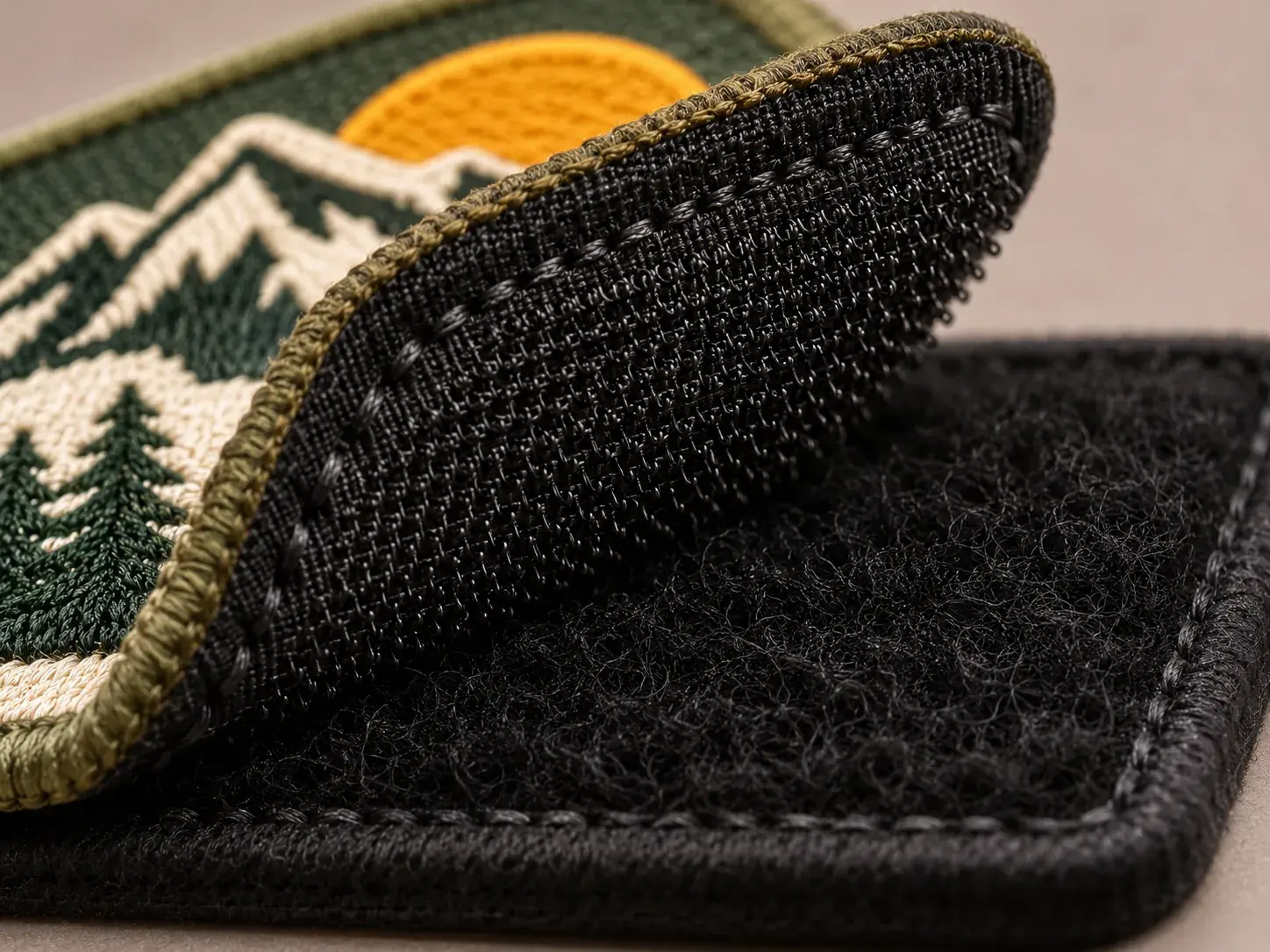
Every hook-and-loop fastener has two halves. The hook side is the stiff, scratchy half covered in tiny plastic hooks. The loop side is soft and fuzzy, with small nylon loops that catch those hooks. When you press the two together, they hold firmly until you peel them apart.
Hook side: on the patch
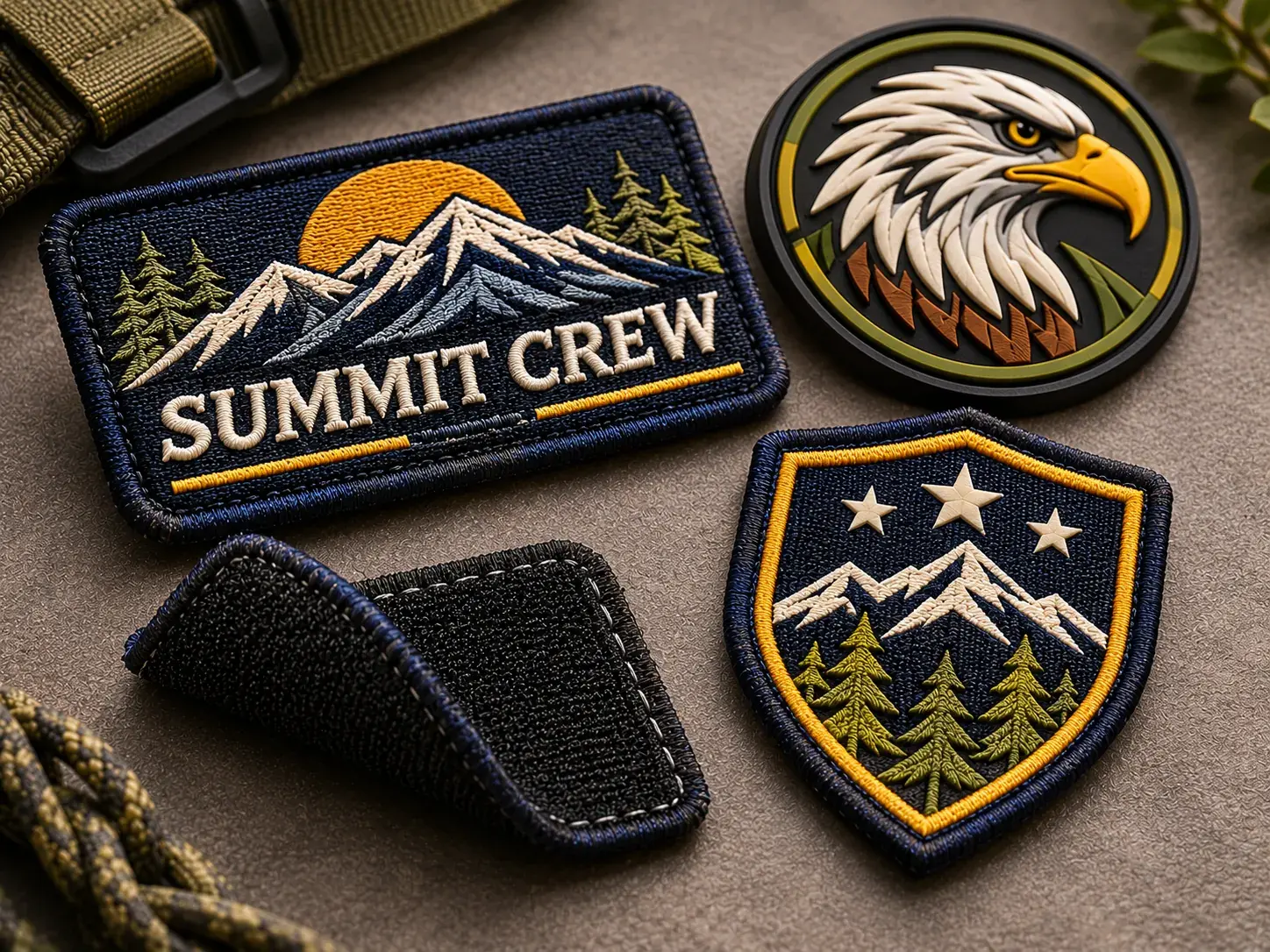
We sew the hook fastener to the back of the patch, trimmed to its outline. This is the standard setup for tactical gear and uniforms.
Loop side: on the gear
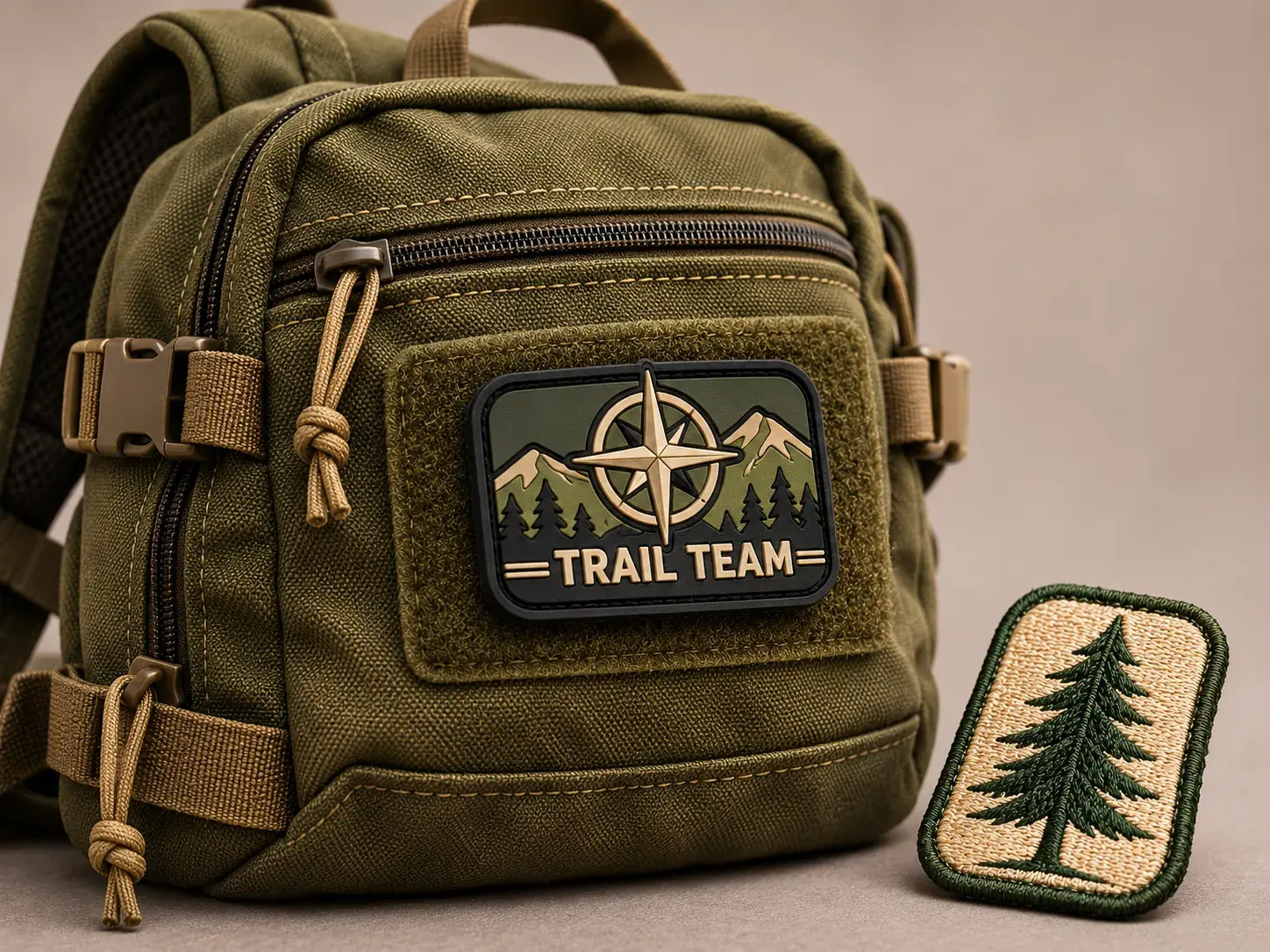
The loop half lives on the item. Many packs, plate carriers and caps already have loop fields sewn in. If yours don't, you can sew a loop panel on first.
So why put the hook on the patch? The answer is comfort and compatibility. A soft loop panel on a jacket won't scratch skin or snag knit fabric when no patch is attached. In addition, most ready-made gear uses loop panels, so hook-backed patches fit right away.
Pairing Velcro Backing with Embroidered, PVC or Woven Patches
Hook backing is a fastener, not a patch style. That's why the first decision is the front of the patch. Each style handles detail, weather and wear differently, so match it to how the patch will be used.
| Patch style | What it looks like | Best for |
|---|---|---|
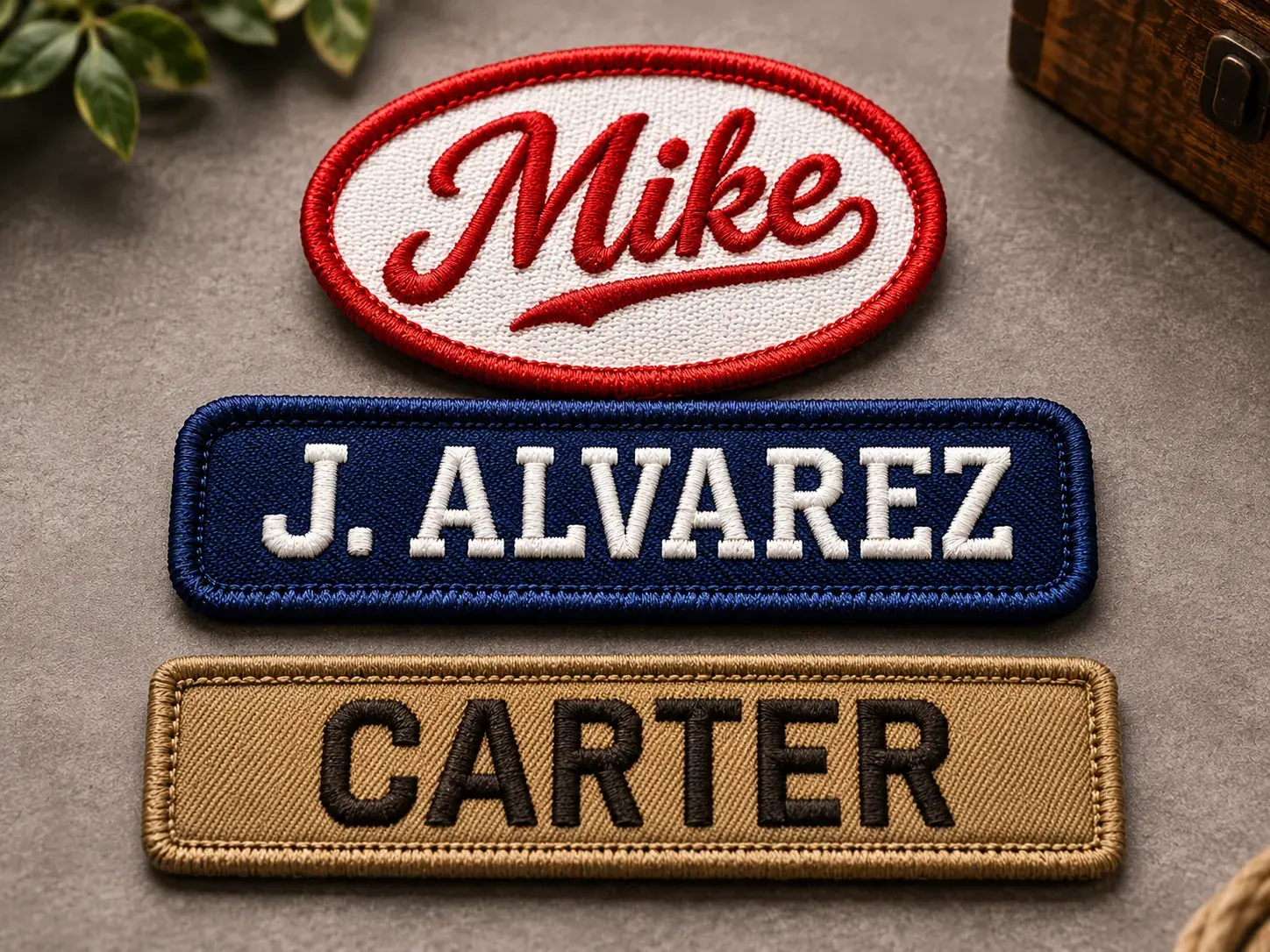
| Embroidered | Raised polyester or rayon thread on a twill base, 50–100% stitch coverage | Uniforms, team gear, classic logos |
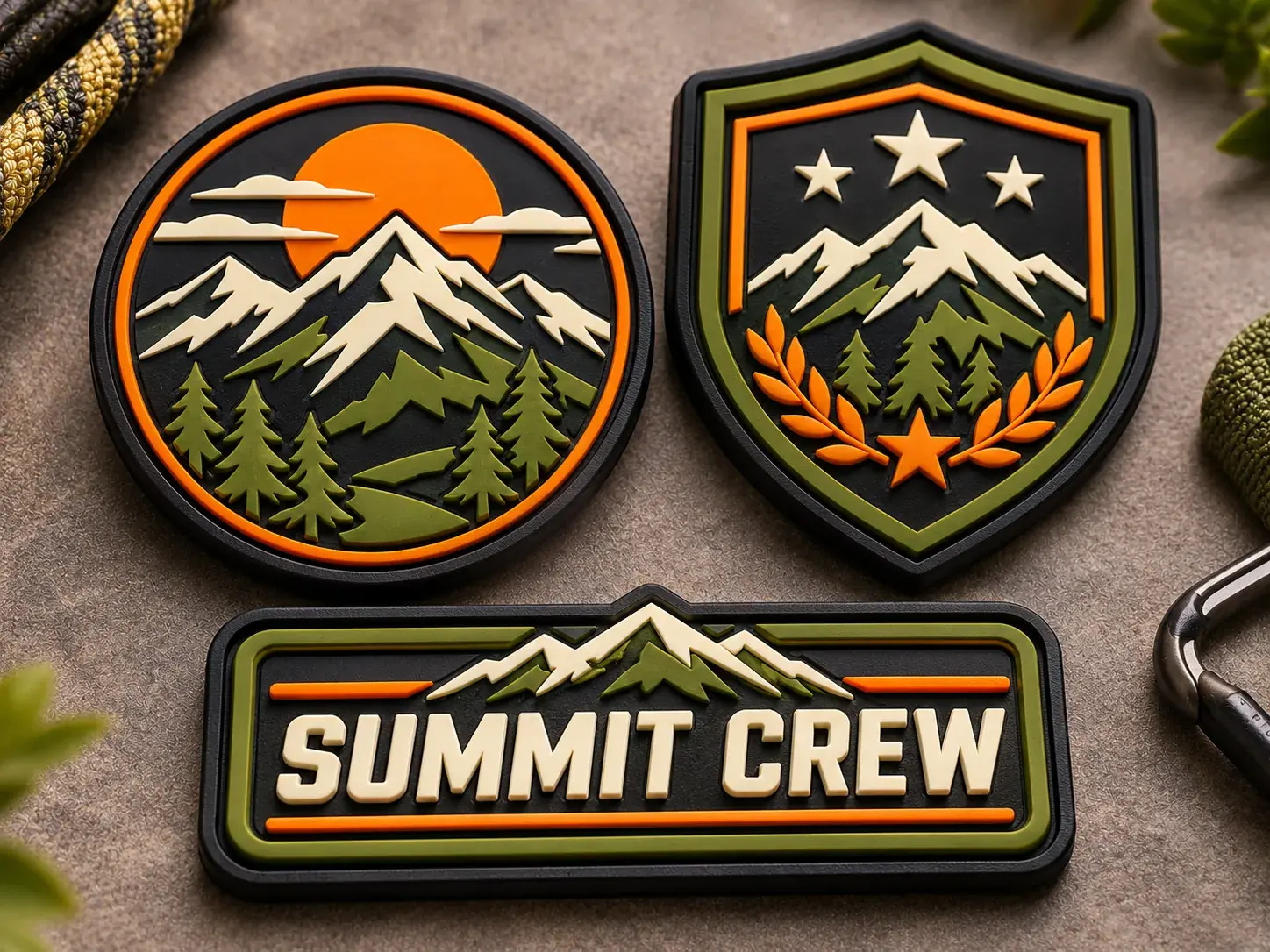
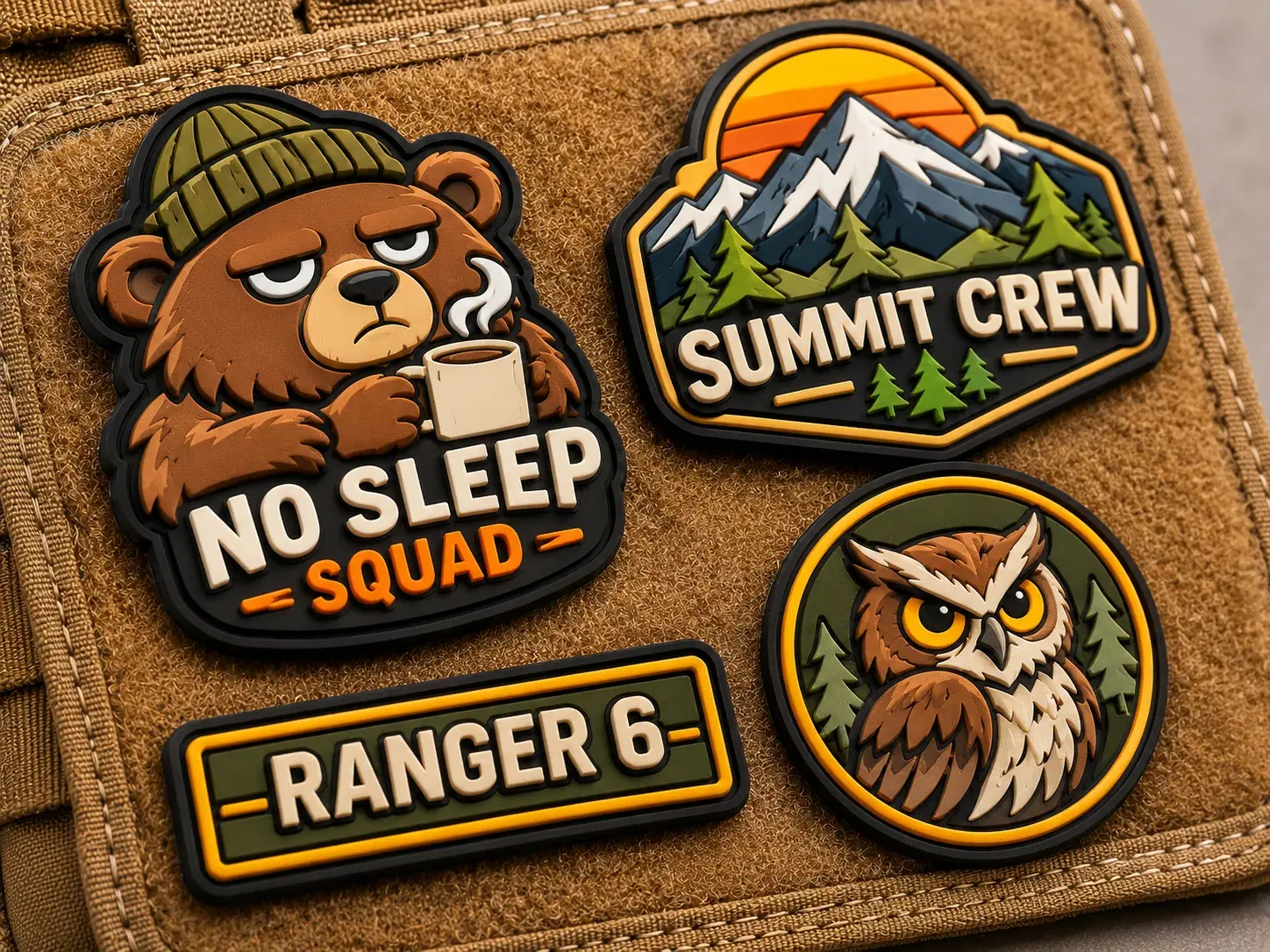
| PVC / rubber | Molded soft PVC in 2D or 3D layers, each color separated | Outdoor packs, wet conditions, bold icons |
| Woven | Thin, flat damask threads that hold small text | Fine detail, low-profile caps, name strips |
PVC and hook backing are a natural match. The rubber shrugs off rain and mud, and the hook is sewn through a flat flange around the edge. Embroidered fronts, on the other hand, give the familiar textured look that many units and teams expect.
Sizes, Shapes and Borders for a Custom Velcro Patch
Common sizes
The 2x3 Velcro patch is the most common size on tactical gear. It fits most loop fields on packs and plate carriers. Round 3-inch patches suit shoulders and caps, while long name strips fit chest panels. Ask for any size your loop panel can hold.
Shapes and borders
Simple shapes like rectangles, circles and shields usually get a merrowed border, a thick overlock stitch that wraps the edge. Custom outlines get a heat-cut border instead, which follows tight curves cleanly. Next, the hook fastener is trimmed to match the outline, so it doesn't show from the front.
For more on outlines and proportions, see our patch size and shape guide.
Velcro Patches for Backpacks, Uniforms and Tactical Gear
Hook-and-loop patches shine wherever the design needs to change. For example, a school club can move patches from one bag to the next each year. Likewise, a work crew can swap a trainee patch for a crew patch without new shirts.
- Backpacks and daypacks: many packs ship with a loop panel. Our guide on how to put patches on a backpack covers the options.
- Uniforms: removable flags, rank or department patches for agencies like those on our police patch page.
- Tactical gear: plate carriers, range bags and caps with loop fields, plus swappable morale patches.
- Brand and event gear: limited-edition patches that customers can collect and rotate.
How to Order Custom Velcro Patches
- 01
Send your artwork
Upload your logo or sketch through the quote form. Tell us the size, quantity and that you want hook-and-loop backing.
- 02
We review and quote
Our team checks the design and replies with a price and any suggestions for detail or patch style.
- 03
Approve your digital proof
You see a mockup with sizes and colors. Production starts only after you approve it.
- 04
Production and inspection
We make the patches, sew on the hook backing and check each batch.
- 05
Shipped with tracking
Your order is packed and shipped to you with tracking.
What We Check on Hook-Backed Patches
A Velcro patch fails at the backing long before the front wears out. That's why inspection focuses on how the hook is attached, as well as the design itself.
- The hook fastener is sewn all the way around, with no loose corners that can peel.
- The hook is trimmed inside the border, so it stays hidden from the front.
- Colors, stitching and border match the approved proof.
- Each patch grips a loop panel firmly and releases cleanly.
Velcro Patches: Frequently Asked Questions
Which side of the Velcro goes on the patch?
The hook side goes on the patch, and the soft loop side goes on your gear. This is the standard for uniforms and tactical equipment. As a result, your patch will fit most loop panels that come built into packs and carriers.
Can I get the loop side too?
Ask our team about matching loop pieces when you request a quote. Loop pieces are useful when a jacket or bag has no loop panel yet. You sew the loop piece on once, and then the patch can come on and off.
Are custom Velcro patches good for backpacks?
They work well on any backpack with a loop panel. If your pack has none, sew a loop panel to the front pocket first. Alternatively, choose sew-on or iron-on backing for a permanent patch.
Can PVC patches have hook and loop backing?
Yes. PVC patches are among the most popular hook-backed patches. The hook is sewn through the flat edge of the rubber, so it stays secure even in wet weather.
How do I wash gear with Velcro patches?
Remove the patch or press it firmly onto a loop panel before washing. Open hook fasteners catch lint and snag other clothes. Also, clean lint from the hooks with a stiff brush to keep the grip strong.
What size should a Velcro patch be?
Measure the loop panel on your gear first. A 2x3 inch rectangle fits most tactical loop fields, while caps usually take smaller patches. Our team can suggest a size when you request a quote.