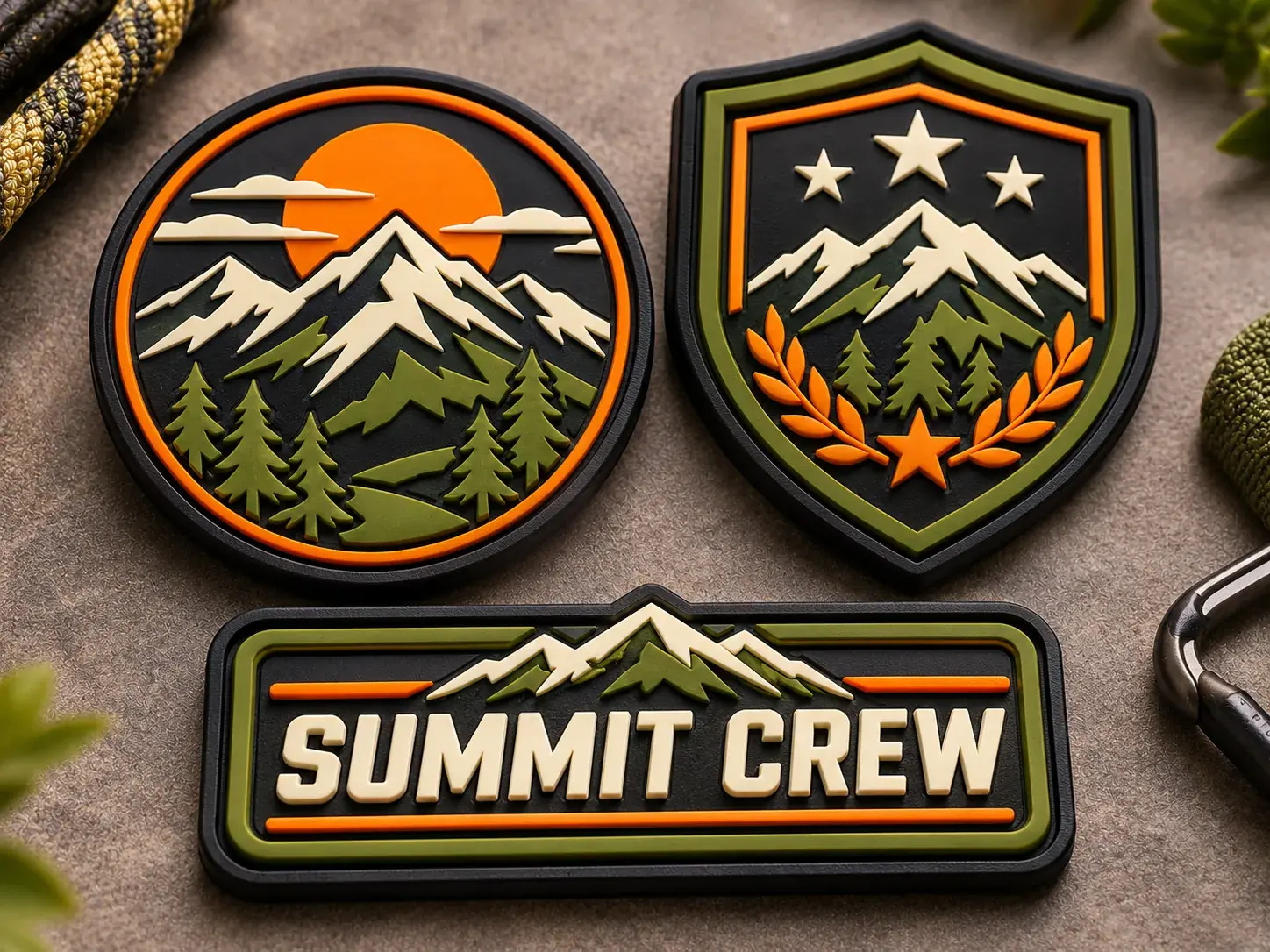
What Are PVC Patches and How Are They Made?
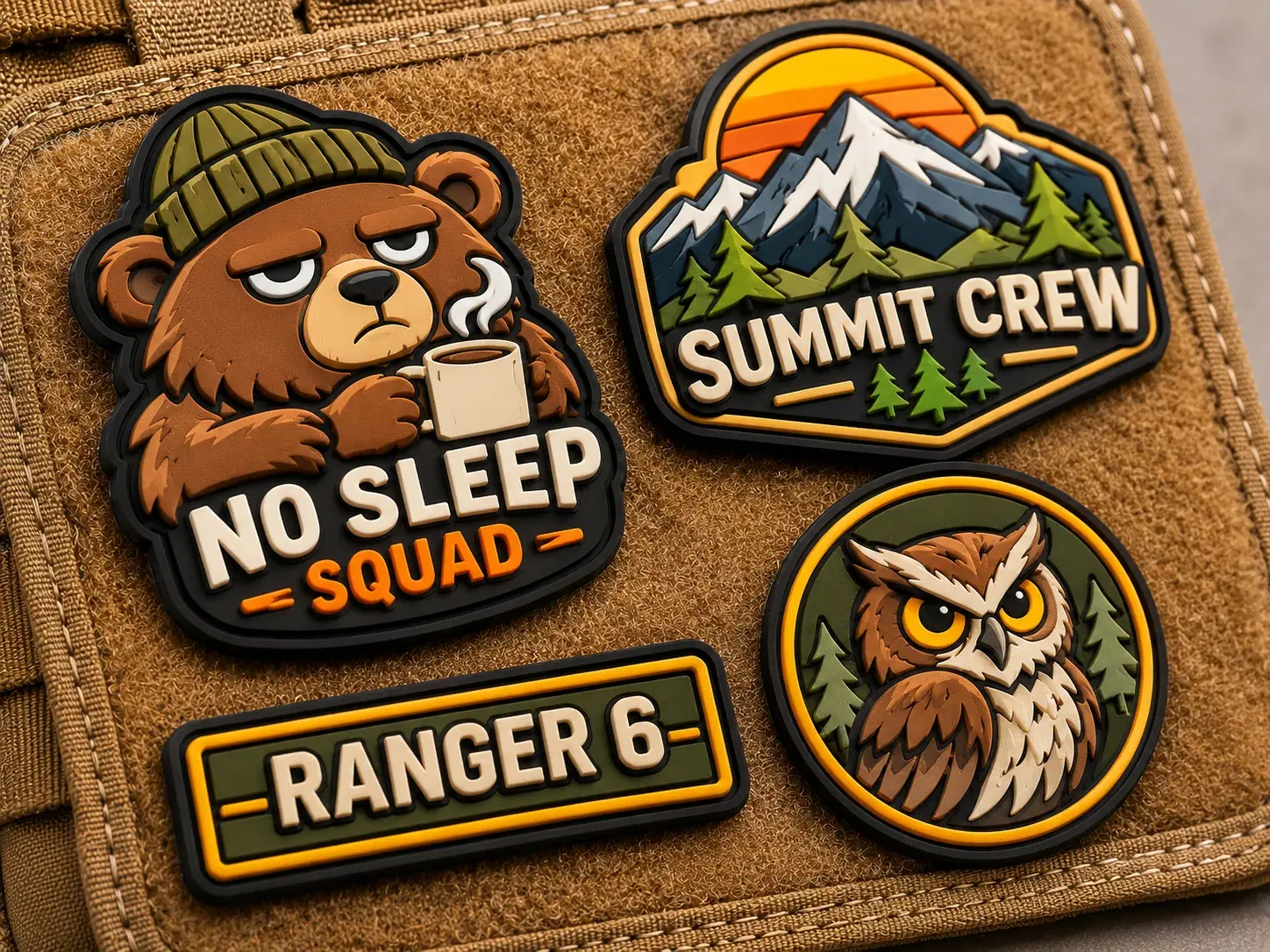
A PVC patch starts as a metal mold cut from your artwork. Every color area becomes its own cavity, separated by thin raised walls. Next, a worker or machine fills each cavity with liquid PVC in the matching color.
Once all colors are in place, we pour a base layer over the back. The mold then goes into an oven, where heat cures the liquid into solid, flexible rubber. Finally, we pop the patch out, trim it and add the backing.
Want to see the full process next to embroidery? Read how custom patches are made.
2D vs 3D Custom PVC Patches
The mold decides the depth of your patch. You can choose between two styles, and many designs mix both.
2D PVC patches
In a 2D patch, each color sits on a flat level. Layers step up like a staircase, so you get clear edges and a slightly raised look. This style suits text-heavy logos and bold graphic designs.
3D PVC patches
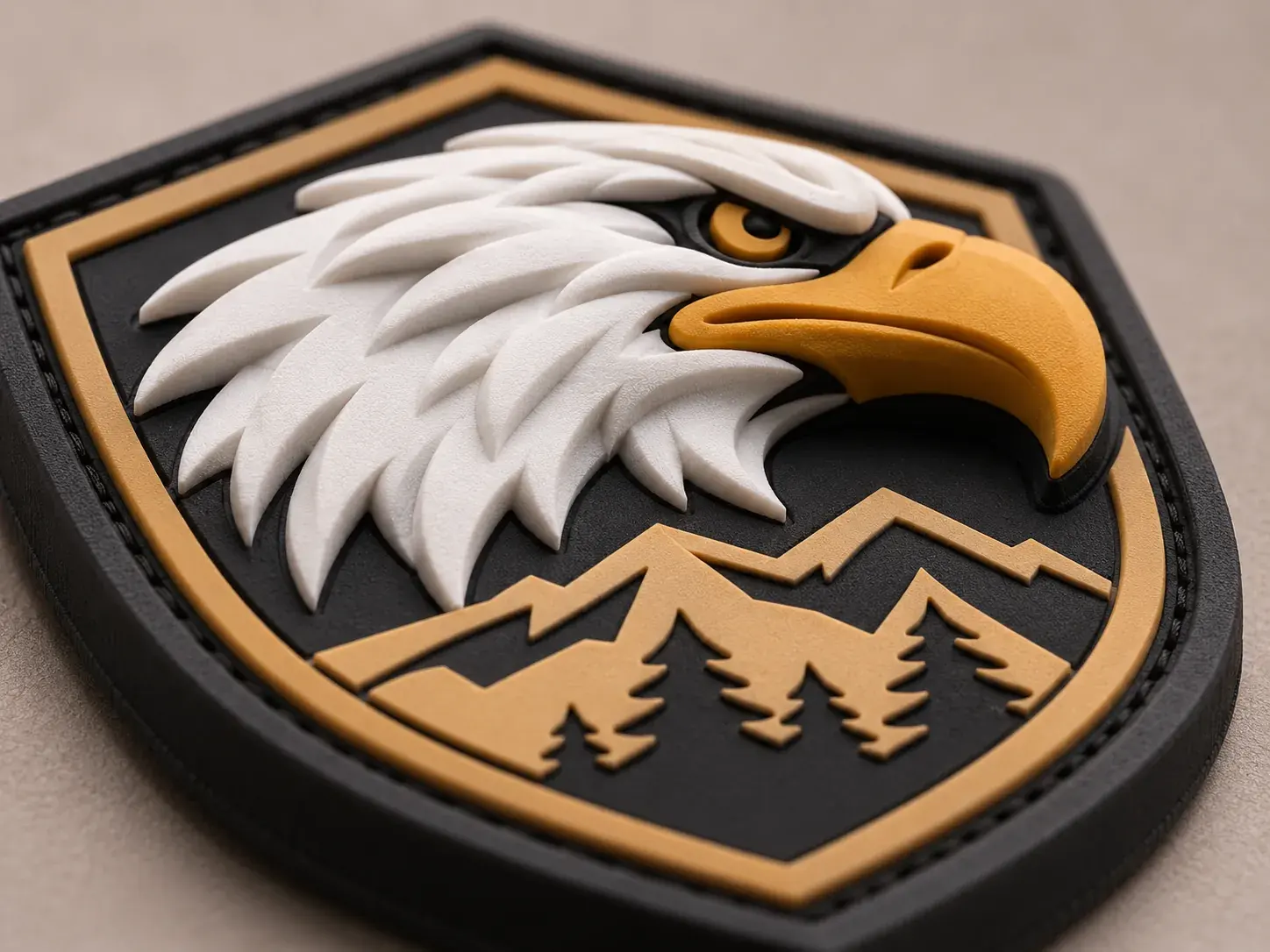
A 3D mold uses sculpted, rounded contours. For example, an animal's face or a curved emblem can rise and slope like a small relief carving. As a result, 3D rubber patches look more lifelike and catch light on their curves.
| Feature | 2D PVC | 3D PVC |
|---|---|---|
| Surface | Flat, stepped layers | Rounded, sculpted contours |
| Best for | Logos, text, badges | Faces, animals, emblems with depth |
| Mold work | Simpler | More detailed carving |
| Look | Clean and graphic | Lifelike and dimensional |
PVC vs Embroidered Patches
Both patch types carry a logo well. However, they behave very differently in the field.
| Factor | PVC patch | Embroidered patch |
|---|---|---|
| Material | Molded PVC rubber | Thread stitched on twill |
| Water and dirt | Water-resistant and easy to wipe clean | Absorbs water and stains |
| Color edges | Sharp, separate color areas | Soft, textured thread edges |
| Feel | Smooth and flexible | Classic fabric texture |
| Fine detail | Clean small shapes, no gradients | Limited by thread width |
| Iron-on backing | Not recommended | Common option |
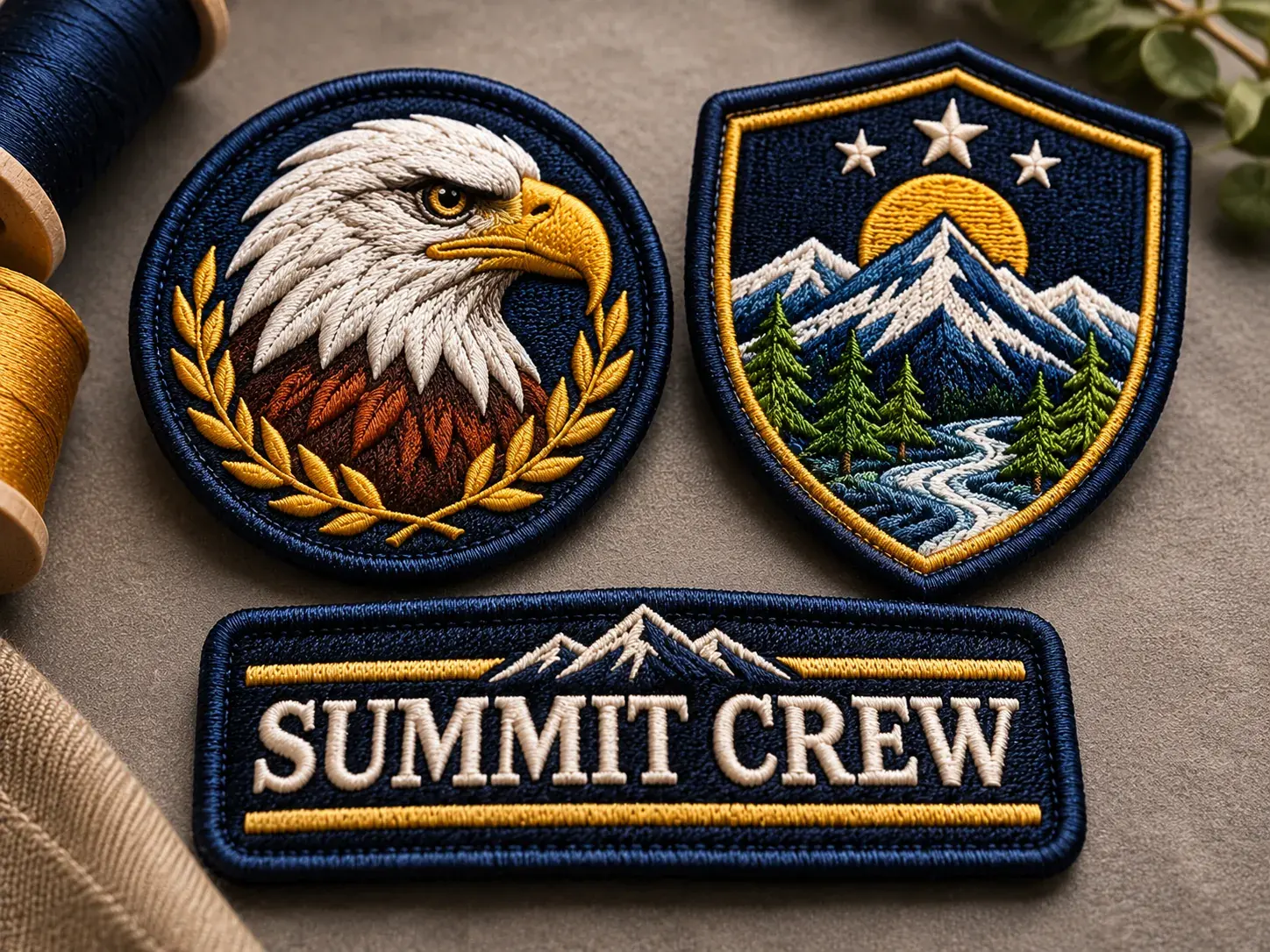
If you want a traditional stitched look, see our custom embroidered patches. For wet, muddy or outdoor use, PVC is usually the stronger choice.
Personalized PVC Patches: Options You Control
Colors
Send Pantone codes and we match each PVC color to them. In addition, keep the color count focused, because every color needs its own fill step.
Size and shape
The mold can follow any outline, so custom shapes need no separate cutting step. Common sizes run from small 2-inch hat patches to 3 by 5-inch flag and name patches.
Backing
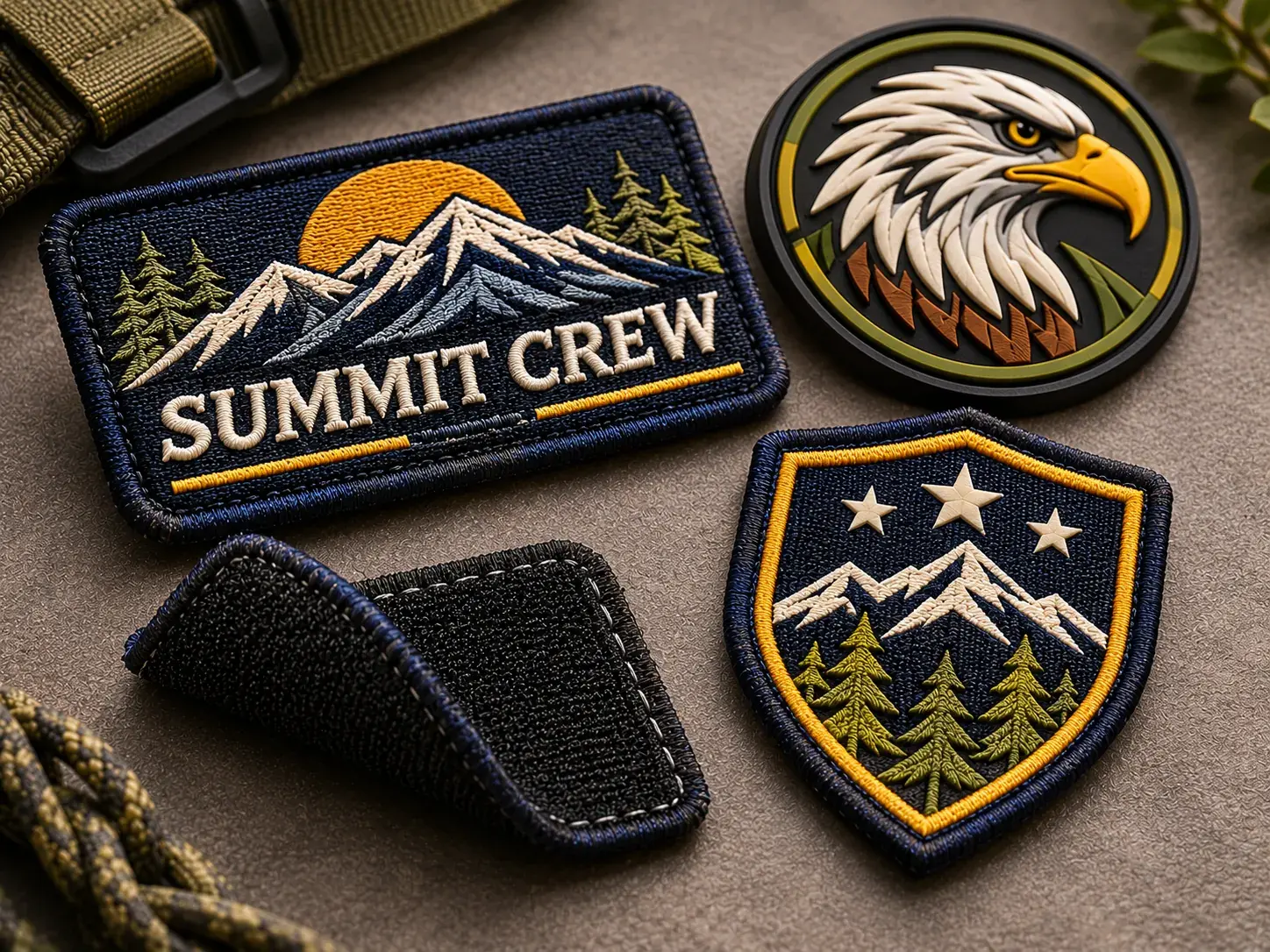
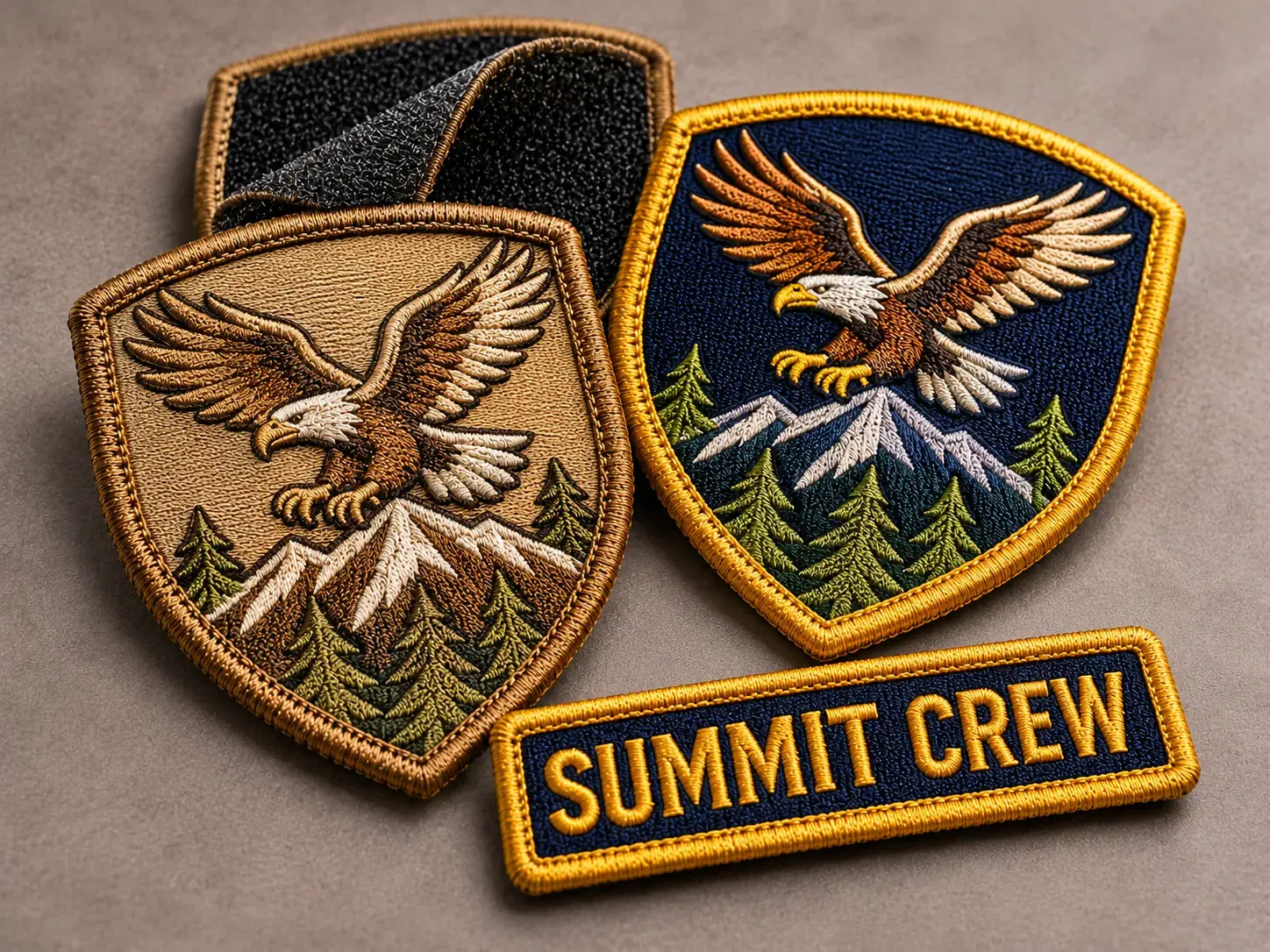
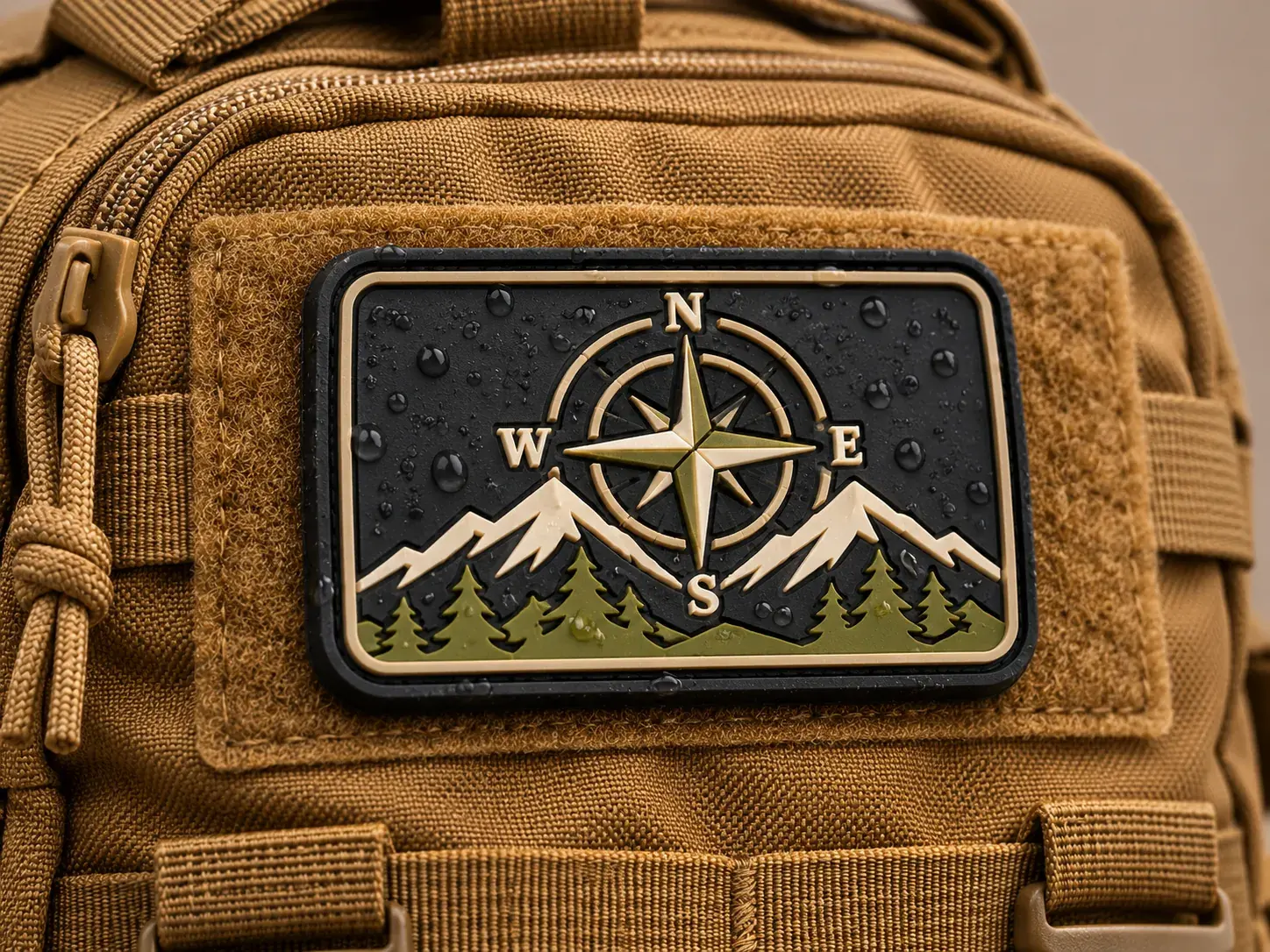
- Hook-and-loop: the hook side is sewn to the back, making PVC Velcro patches easy to swap. See our custom Velcro patches.
- Sew-on: many molds include a thin sewing channel around the edge to guide the needle.
- Adhesive: peel-and-stick backing suits cases, coolers and hard surfaces.
We don't suggest iron-on backing for PVC. Direct iron heat can soften or warp the rubber.
Where Rubber Patches Perform Best
- Plate carriers, packs and caps, especially for custom morale patches
- Unit and team identifiers on custom military patches
- Outdoor, fishing and hunting brand gear
- Rubber logo patches on bags, coolers and hard cases
- Workwear and safety gear that gets hosed down
Custom PVC patches also make strong brand pieces outside of apparel. For instance, a rubber logo patch on a tumbler sleeve, laptop bag or gear case stays readable through heavy handling. Since the patch flexes without cracking, it follows curved and soft surfaces well.
Ordering Custom PVC Patches
- 01
Share your design
Upload your logo or sketch and note the size, colors, 2D or 3D style and backing.
- 02
Review and quote
We check the art for mold detail and reply with a price and any changes that would help.
- 03
Approve the digital proof
You see a mockup showing colors and layers. We make the mold only after you approve.
- 04
Molding and inspection
We fill, cure, back and check your patches batch by batch.
- 05
Delivery
We ship the finished patches to your US address with tracking.
Ask our team about quantities and timing when you request a PVC patch quote.
Quality Checks and Care
During inspection, we look for color bleeding between cavities, bubbles in the rubber and rough trim edges. We also test that the backing sits flat and firm.
Care is simple. Wipe the patch with a damp cloth and mild soap. On garments, wash cold and air dry to protect the stitching that holds the patch in place.
PVC Patches: Frequently Asked Questions
Are PVC patches the same as rubber patches?
Yes. Rubber patch is the everyday name, while PVC is the actual material. Both terms describe a soft, flexible molded patch.
Are custom PVC patches waterproof?
PVC does not absorb water, so the patch itself shrugs off rain and spills. However, the stitching or adhesive holding it to your gear can still be affected by long soaking.
Can PVC patches have gradients or photo detail?
No. Each color fills its own mold cavity, so colors cannot fade into each other. If you need gradients, a sublimated or printed patch is a better fit.
Can I iron on a PVC patch?
We don't recommend it. An iron can melt or warp the rubber. Instead, sew it on, use hook-and-loop backing or choose an adhesive back.
How small can text be on a PVC patch?
PVC holds small text better than thread does, because there is no thread width to fill. Even so, very thin strokes need enough wall space in the mold. Our team flags any lines that are too fine during review.
How thick are custom PVC patches?
Thickness depends on the number of layers and on 2D or 3D molding. In general, 2D patches are thinner and lighter, while sculpted 3D areas add height. We show the layer plan on your proof before production.
What file format works best for personalized PVC patches?
Vector art in AI, EPS, SVG or PDF is ideal, because each color shape becomes a mold cavity. A clear image or sketch also works, and we can rebuild it.