How the Heat-Seal Backing on Custom Iron On Patches Works
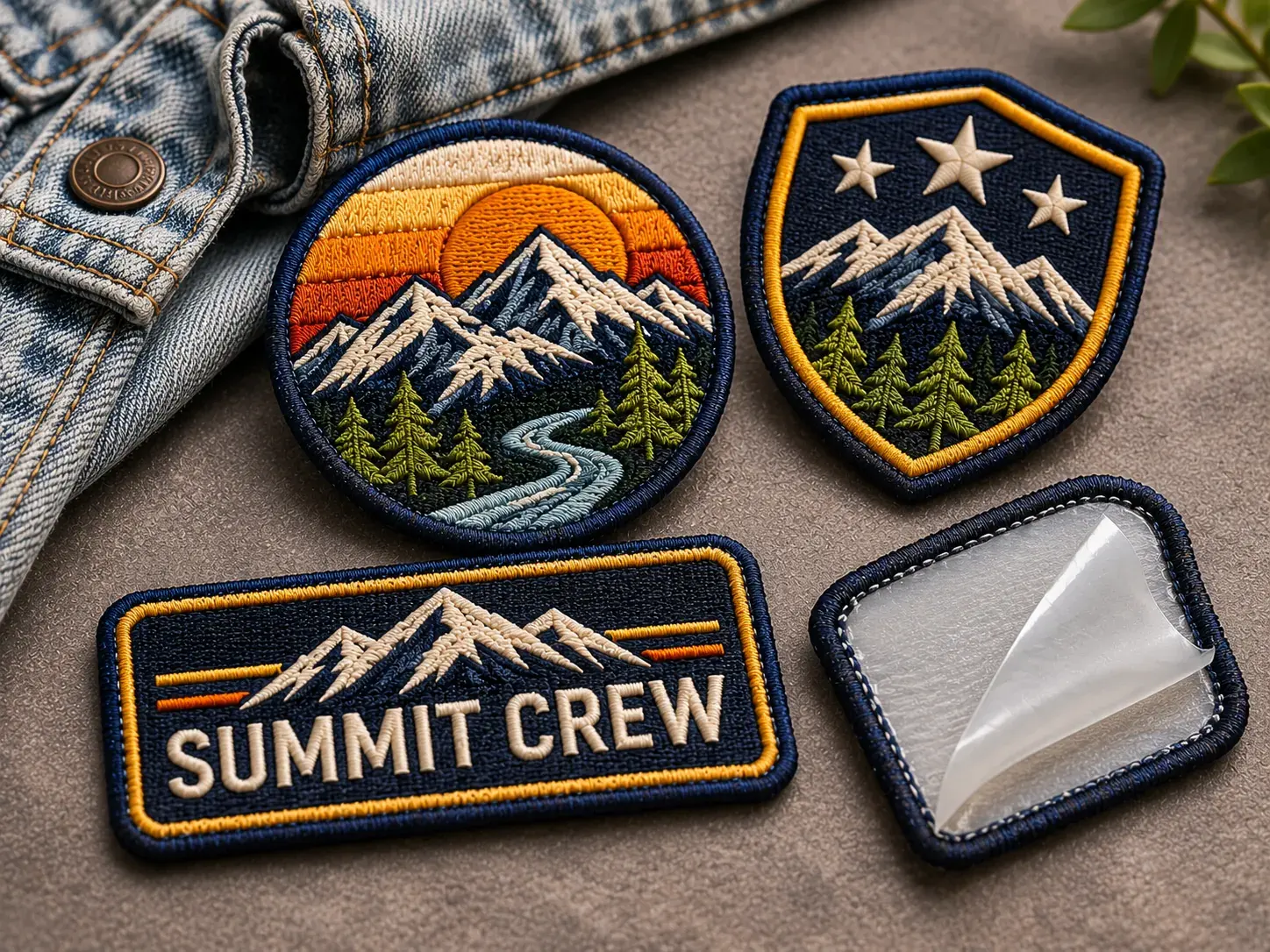
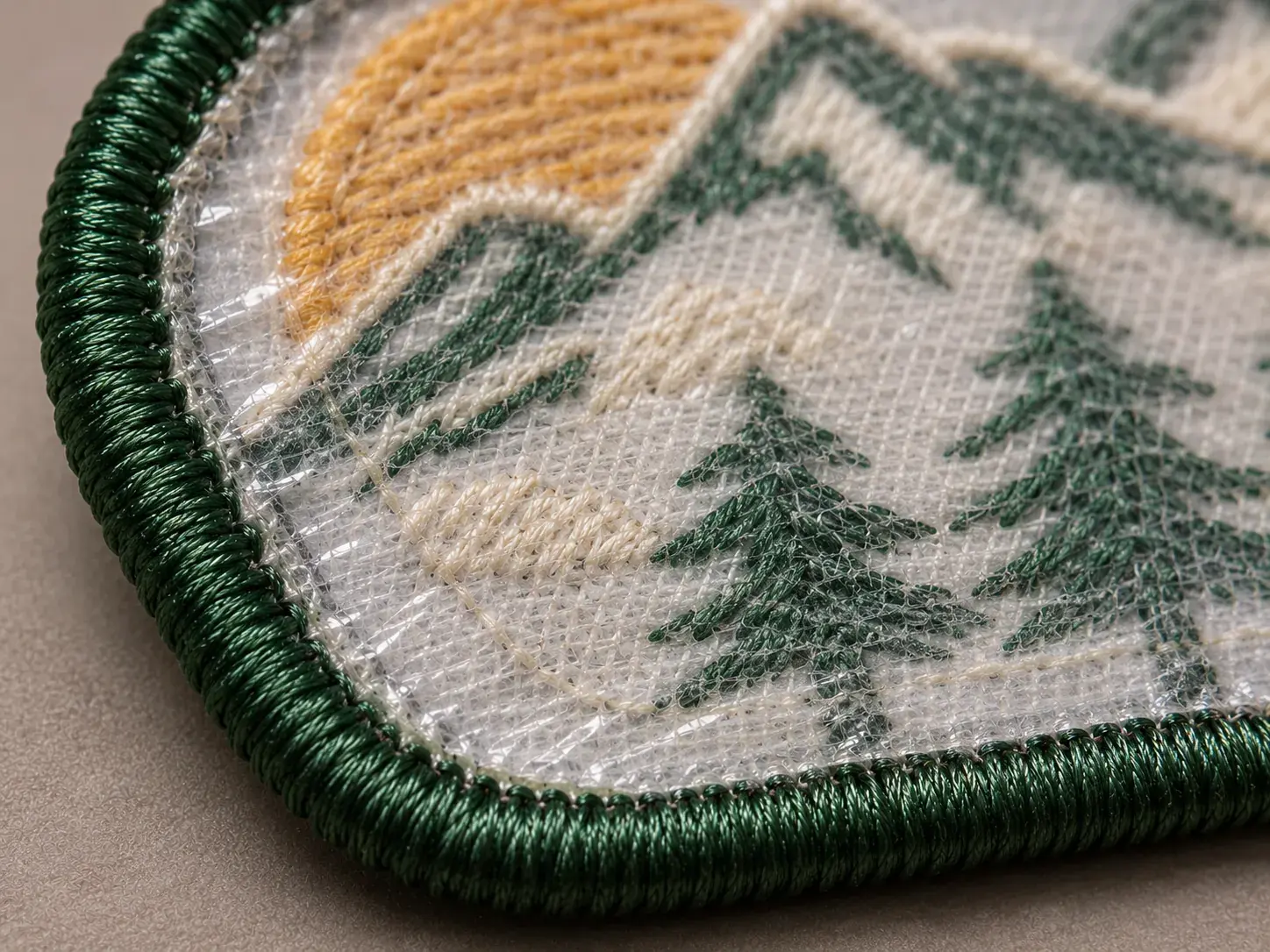
Iron-on backing is a sheet of thermoplastic adhesive, often called heat-seal or hot-melt film. During production, we laminate this film to the back of the finished patch. At room temperature, it is dry and smooth, so patches stack and ship without sticking together.
Heat changes that. Once the film reaches its melting point, it turns tacky and flows into the fibers below. Then, as it cools under pressure, it locks the patch to the garment. Because the bond depends on fibers to grip, the fabric matters as much as the patch.
Fabrics That Work With Iron-On Patches (and Ones That Don't)
The best fabrics are woven, natural and heat-tolerant. They have open fibers for the adhesive to grab, and they won't scorch at pressing temperatures. Synthetic or coated fabrics are a different story.
| Fabric | Iron-on fit | Why |
|---|---|---|
| Cotton, denim, canvas, twill | Excellent | Tight weave, high heat tolerance, fibers grip the adhesive |
| Cotton-poly blends | Good | Bonds well; use a pressing cloth and moderate heat |
| 100% polyester | Use care | Can shine or melt at high heat; test first |
| Nylon, rain shells, coated fabrics | Not recommended | Low melting point or a slick coating blocks the bond |
| Leather, vinyl, silk | Not recommended | Heat can damage the surface; sew-on is safer |
| Stretchy knits and performance wear | Use care | The patch can lift as the fabric stretches |
For fabrics in the last few rows, choose sew-on or hook-and-loop backing instead. Our patch backing types guide compares every option side by side.
Patch Styles That Take Iron-On Backing
Iron on embroidered patches
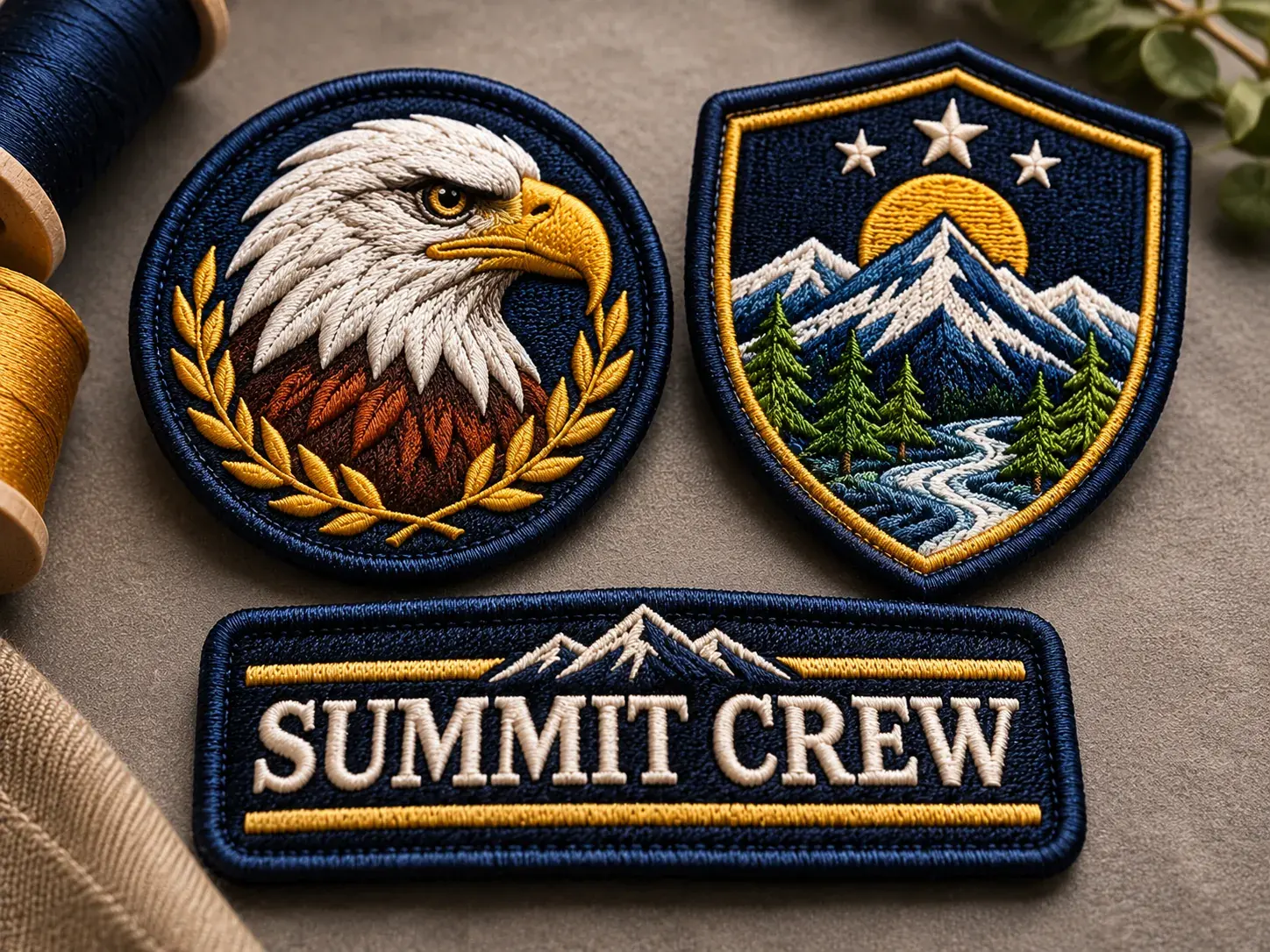
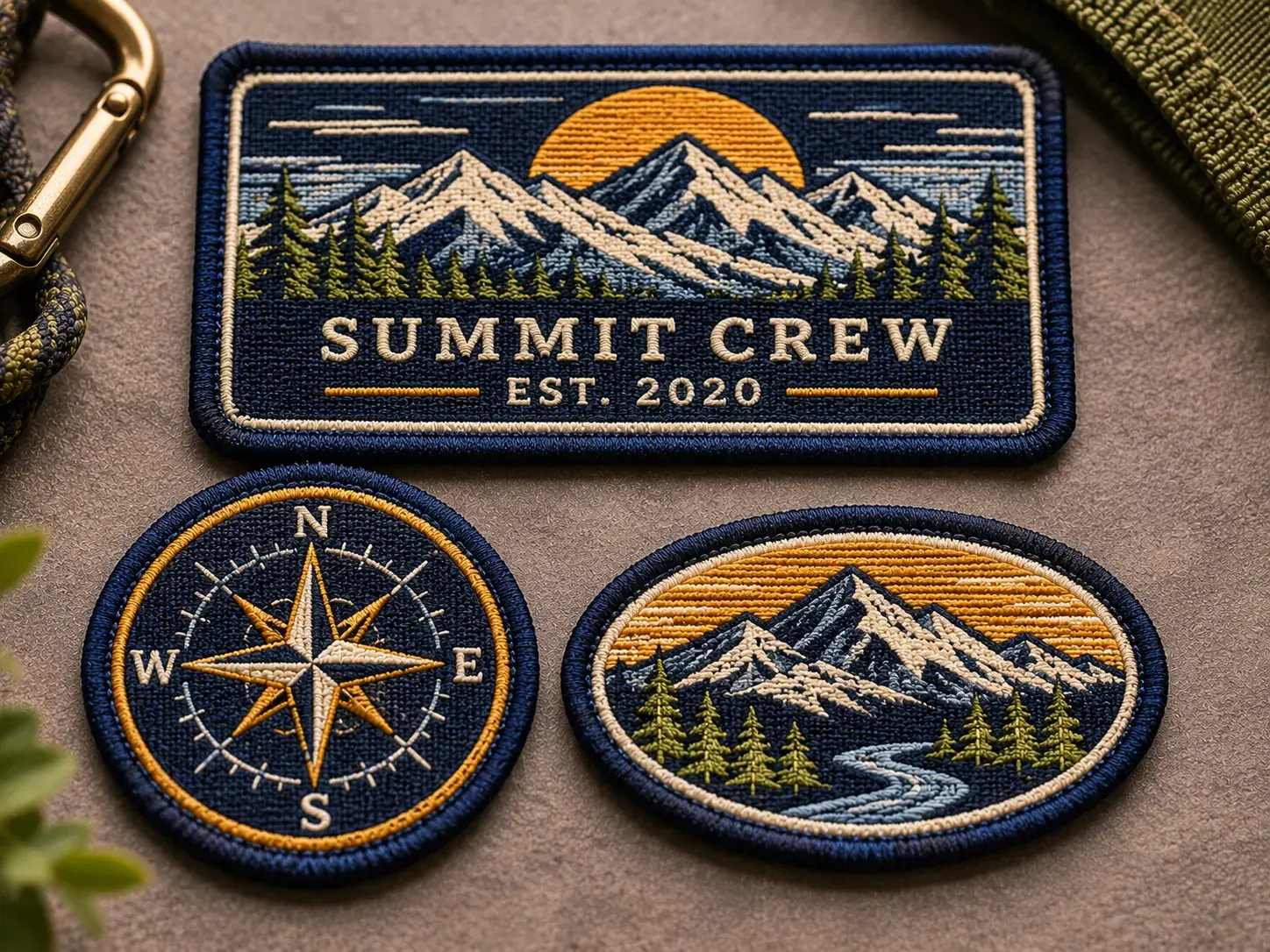
Embroidery is the most popular pairing. The twill base and polyester thread handle pressing heat well, and the backing sits flat behind the stitches. Lower stitch coverage keeps the patch thinner, so heat reaches the adhesive faster. You can see more stitch options on our embroidered patch page.
Woven and chenille
Woven patches are thin and flat, so they bond easily. That's why they're a smart pick for small logos on shirts. Chenille patches also accept heat-seal backing on their felt base, although their thick loops need firm, even pressure.
What about PVC and leather?
Direct heat can soften PVC and mark leather. For that reason, we usually suggest sew-on or hook backing for those materials. Ask our team if you're unsure which backing suits your design.
Where Personalized Iron On Patches Make Sense
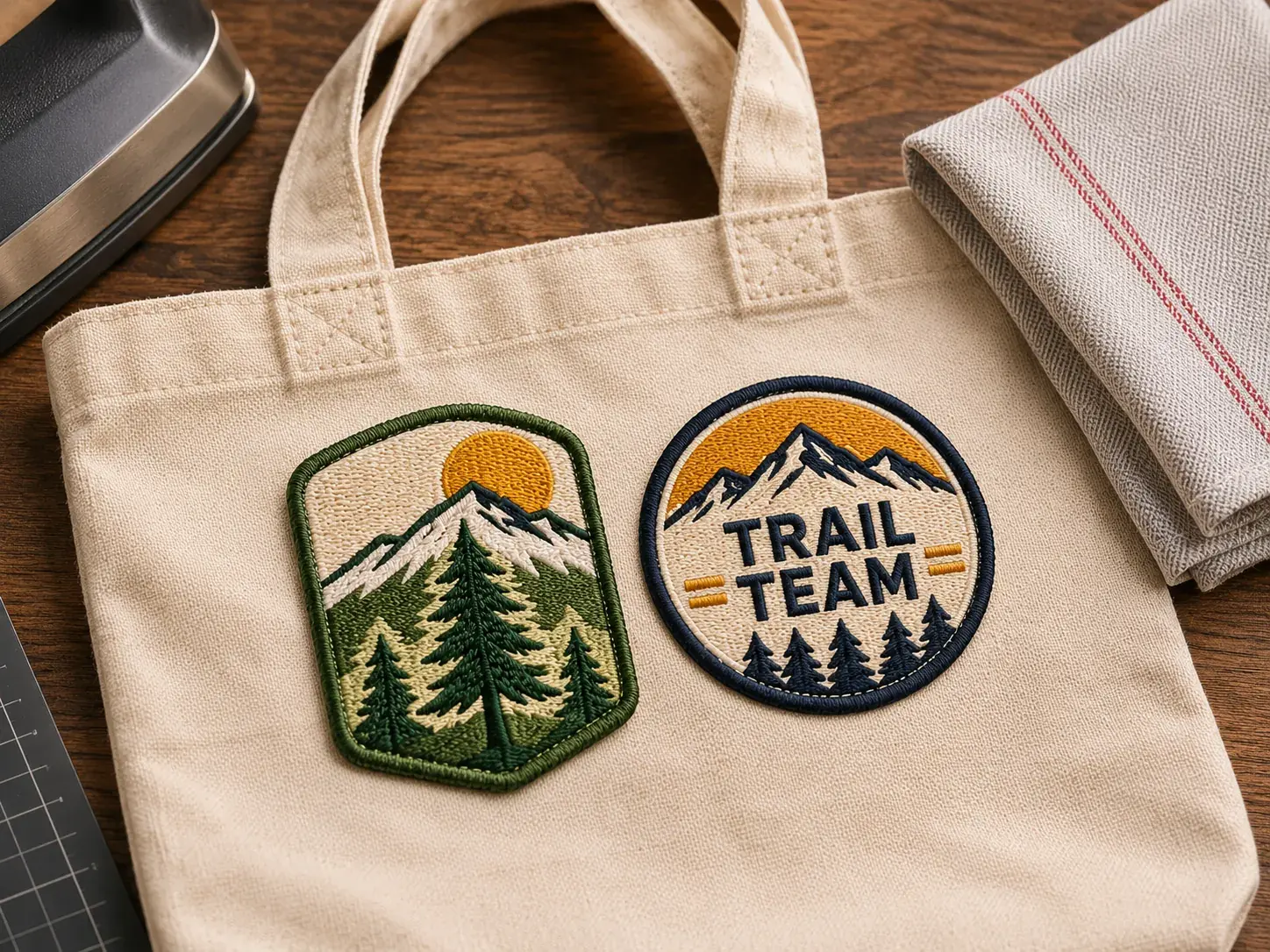
Iron-on backing suits projects where people apply patches themselves, quickly and without sewing skills. For example, families add personalized iron on patches to school bags, and bands sell them at shows. In addition, brands ship them in merch kits for fans to customize their own gear.
- Retail and merch: iron on logos sold alongside shirts and totes.
- Events and camps: patches handed out for guests to apply at home.
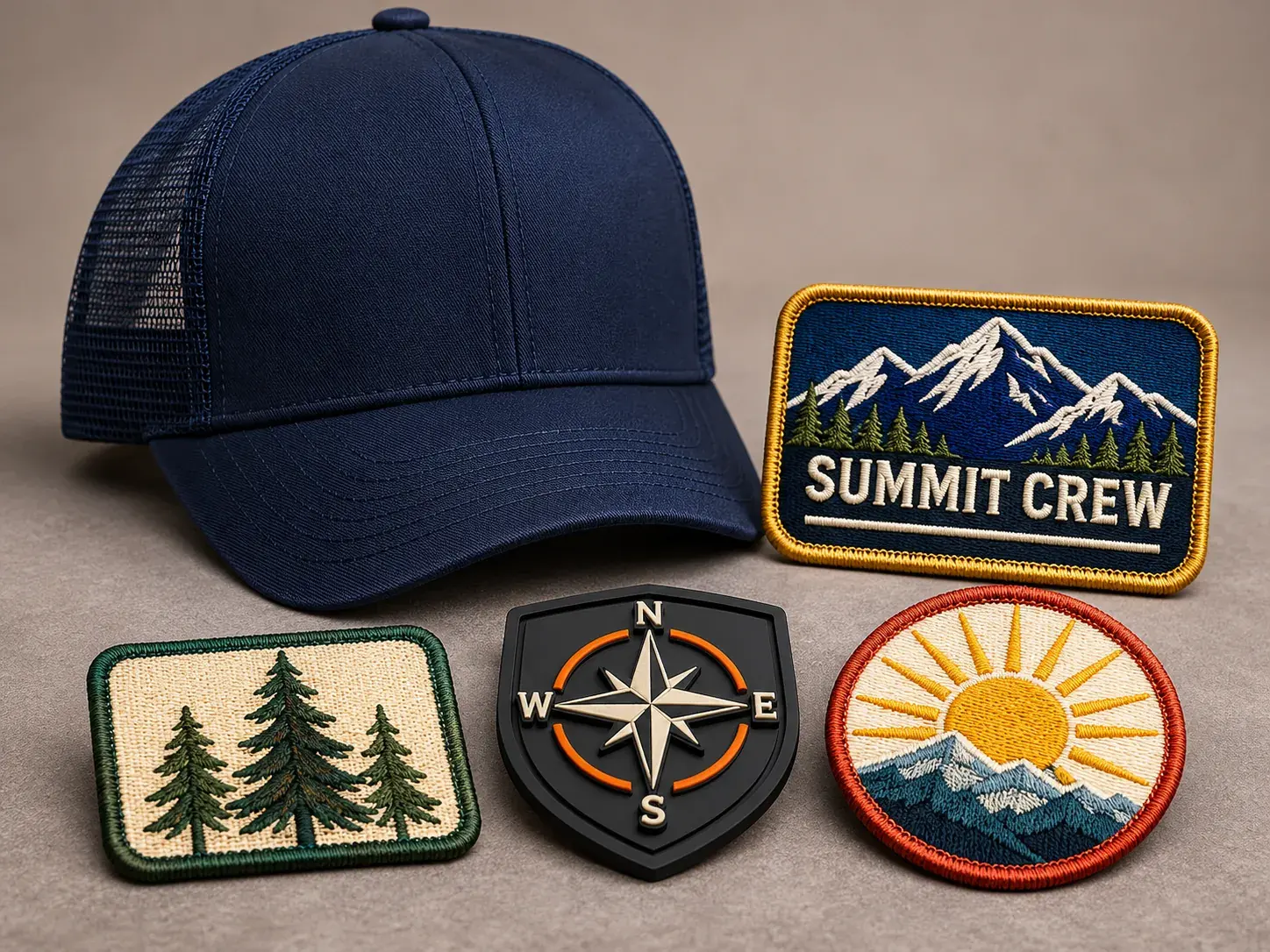
- Caps: iron-on works on cotton caps with a heat press. See our hat patch options for sizing.
- Workwear: a heat-seal layer holds the patch in place while it is sewn down for heavy laundering.
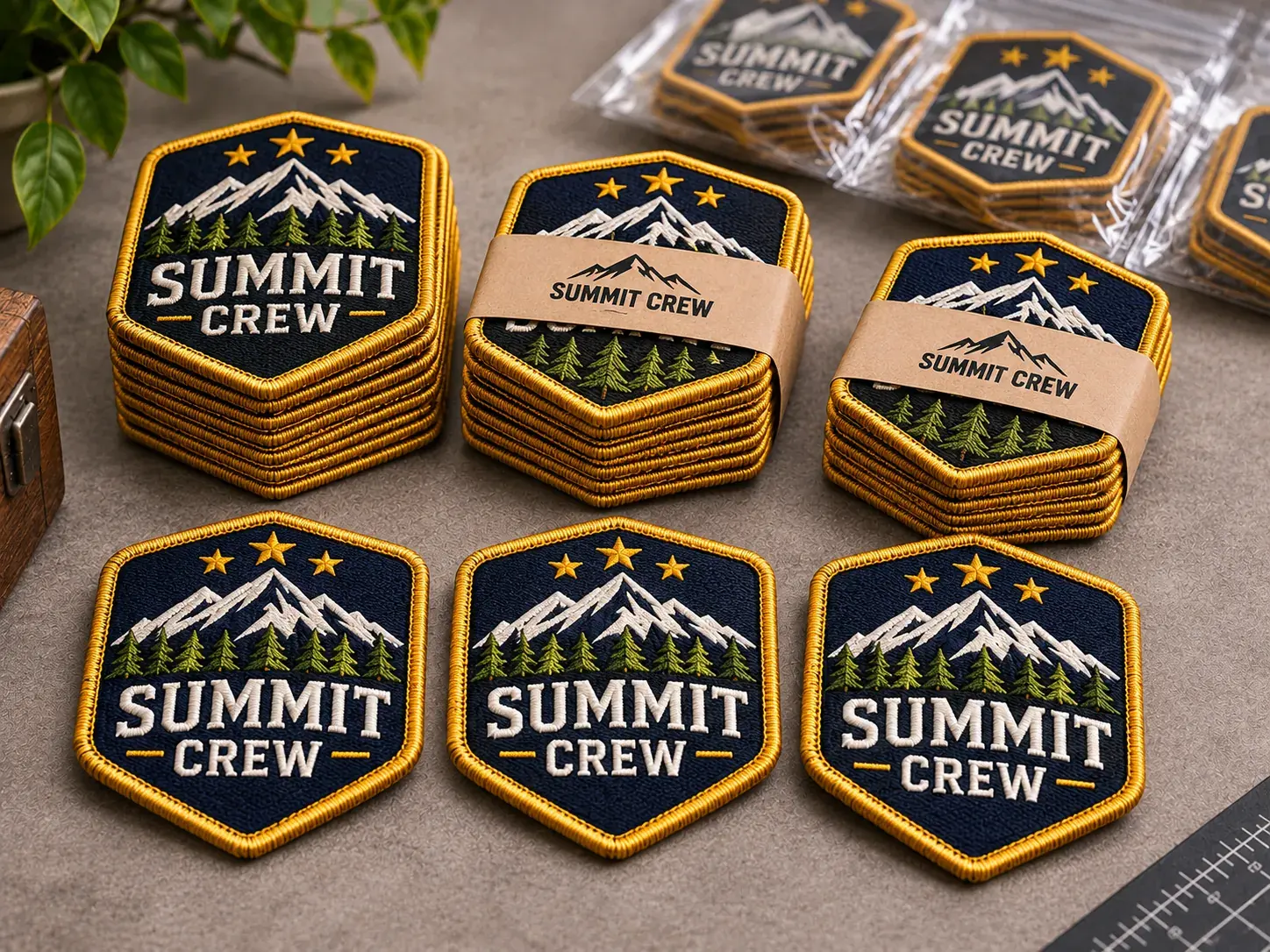
Ordering large quantities for resale? Our page on wholesale and bulk iron on patches covers consistency and packaging questions.
Ordering Custom Iron On Patches
- 01
Send your artwork
Upload your design through our quote request form and choose iron-on backing.
- 02
We review and quote
Our team checks the design and the fabric you plan to use, then replies with a price.
- 03
Approve the digital proof
Check sizes and colors on your mockup. Nothing goes into production until you approve.
- 04
Production and inspection
We make the patches, laminate the heat-seal film and inspect every batch.
- 05
Shipped with tracking
Your patches are packed flat and shipped to you with tracking.
Keeping Iron-On Patches in Place
A good bond lasts through normal wear and washing. Still, a few habits help it last longer. Wash the garment inside out in cool water, and skip high dryer heat, which can soften the adhesive again.
For items that see hard use, add a row of stitches around the border after ironing. The adhesive keeps the patch flat while you sew, so the result looks clean.
Size plays a part, too. A household iron heats a small area evenly, so patches up to about 4 inches bond easily at home. Larger designs, however, often need a heat press to warm the whole adhesive layer at once. Keep that in mind if your customers will apply the patches themselves.
Iron-On Patches: Frequently Asked Questions
Do iron-on patches stay on through washing?
Yes, on suitable fabrics they hold up to regular washing. Turn the garment inside out and use cool water. For daily workwear, stitching around the edge adds extra security.
Can I iron a patch onto polyester or nylon?
Polyester can work with low heat and a pressing cloth, but test a hidden spot first. Nylon and coated rain fabrics usually melt or resist the adhesive. Choose sew-on or hook-and-loop backing for those.
Are iron on embroidered patches thicker than sew-on ones?
Only slightly. The heat-seal film is very thin, so the patch looks almost the same from the front. The main difference is a smooth, slightly glossy layer on the back.
Can iron-on patches be sewn on later?
Yes. A needle passes through the adhesive layer easily. Many buyers iron the patch first to position it, then stitch the border for a permanent hold.
Can I put iron-on patches on hats?
Cotton and cotton-blend caps work well, ideally with a heat press that fits the curve of the crown. However, mesh trucker backs and foam fronts need care because they can melt.
How do I know if a patch has iron-on backing?
Flip it over. An iron-on patch has a smooth, plastic-like coating on the back. A sew-on patch shows bare stitching or fabric instead.