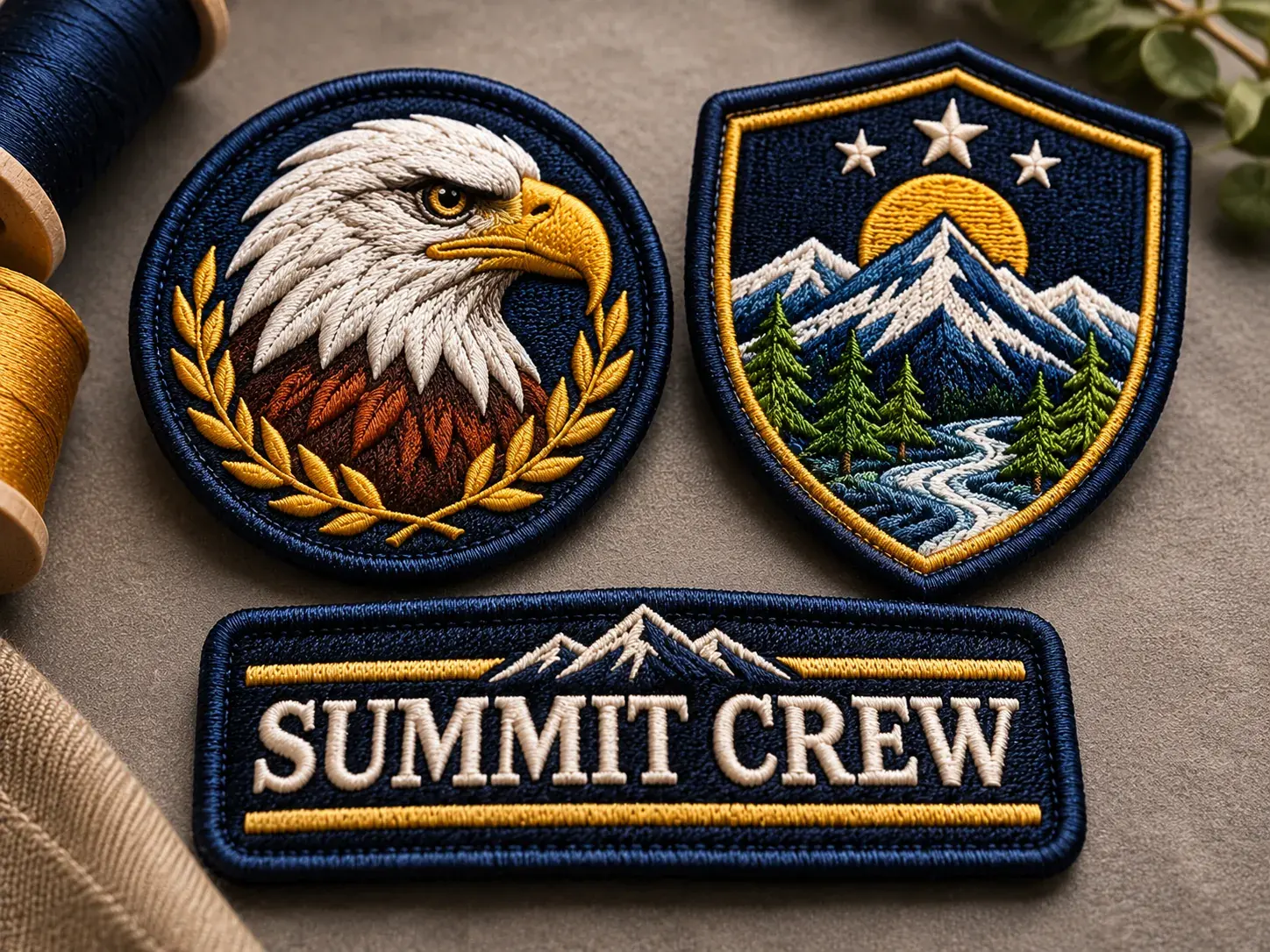
How Custom Embroidered Patches Are Made
Every embroidered patch starts with digitizing. First, a technician converts your artwork into a stitch file. That file tells the machine where each stitch goes, which direction it runs and which thread color to use.
Next, the machine stitches the design onto twill, a tightly woven polyester-cotton fabric. Twill holds stitches firmly, so the patch keeps its shape. After stitching, the patches are cut out, bordered and backed.
Stitch types that shape the look
- Satin stitches are long, glossy stitches for lettering, outlines and narrow shapes.
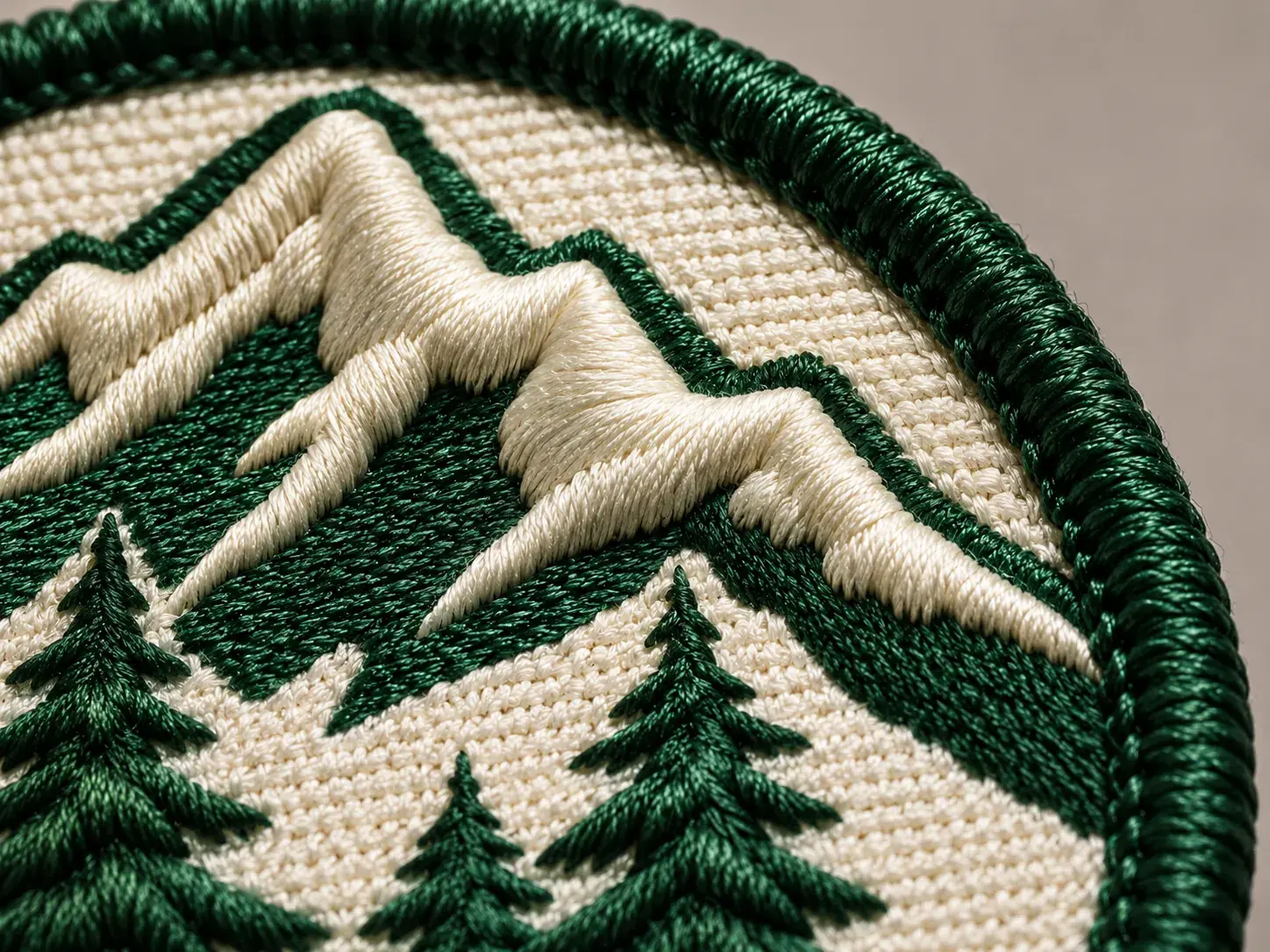
- Fill (tatami) stitches are short, layered rows that cover wide areas evenly.
- Running stitches are thin single lines for fine details and small accents.
Polyester vs rayon thread
Polyester thread resists fading and holds up well to frequent washing. Rayon, on the other hand, has a softer, higher sheen that suits dress and display pieces. For most work uniforms and outdoor gear, polyester is the practical pick.
Embroidered Badge Patch Styles: Flat, 3D Puff and Appliqué
Not every embroidered badge needs the same build. In fact, the style you choose for custom embroidered patches changes their texture, weight and cost drivers.
Flat embroidery
Flat embroidery is the classic style. Stitches lie level across the twill, which keeps text sharp and the patch thin. It works for nearly any logo.
3D puff embroidery
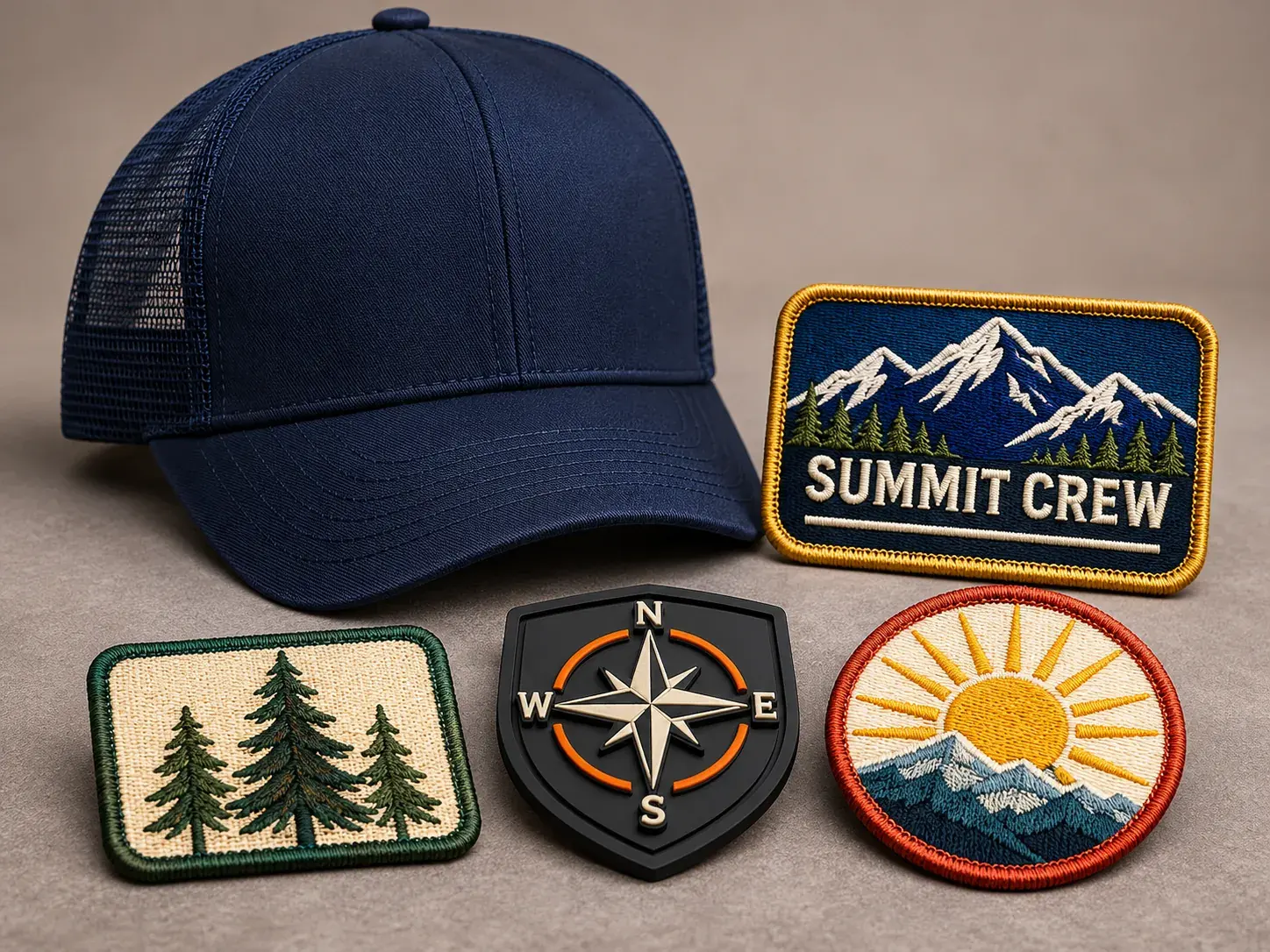
For 3D embroidered patches, a foam layer sits under selected satin stitches. The thread wraps over the foam and lifts those areas off the surface. Bold letters and simple shapes puff best, while thin lines and tiny text stay flat.
Appliqué patches
Custom appliqué patches stitch a piece of fabric, such as felt or twill, onto the base instead of filling the area with thread. This creates large color blocks with less stitching. That's why appliqué is popular for letters, numbers and bigger designs.
Customization Options for Your Embroidered Patches
Size
Measure the widest point of the design. Small chest and hat patches sit around 2 to 3 inches, while sleeve patches often run 3 to 4 inches.
Shape
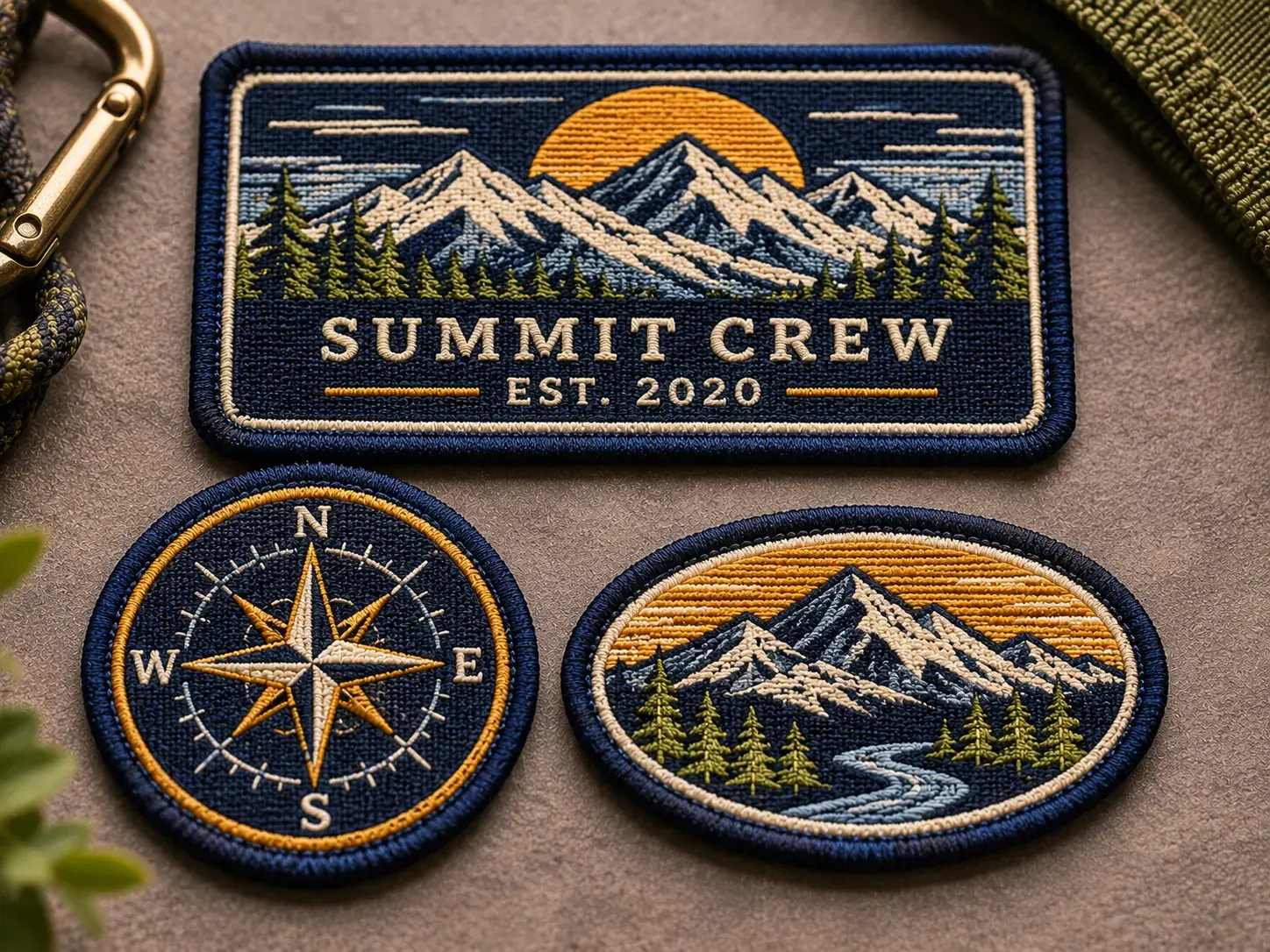
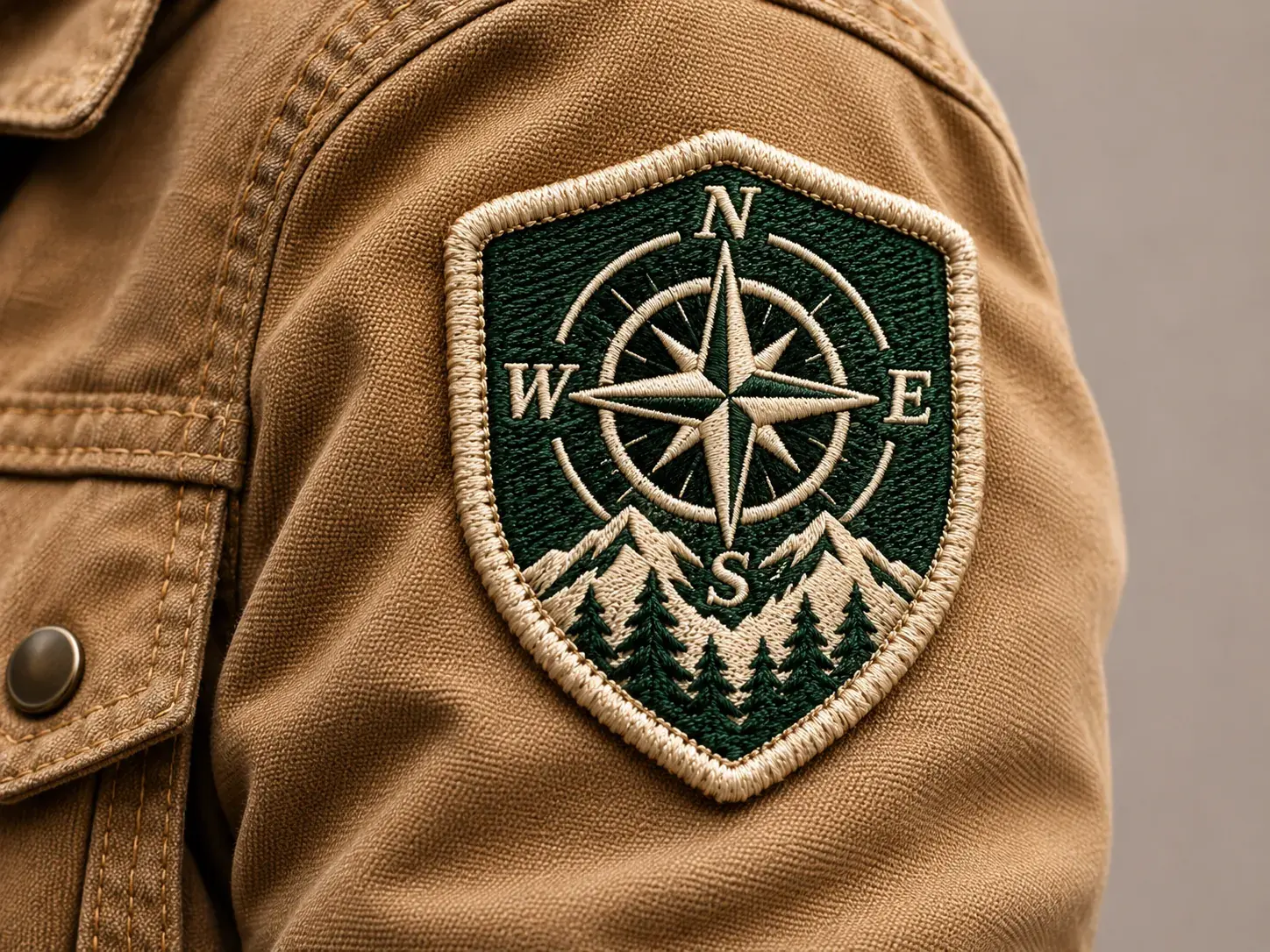
Choose a circle, shield, oval or rectangle, or cut the patch to follow the outline of your logo.
Thread colors
Send your Pantone references and we match them to the closest available thread shades.
Border
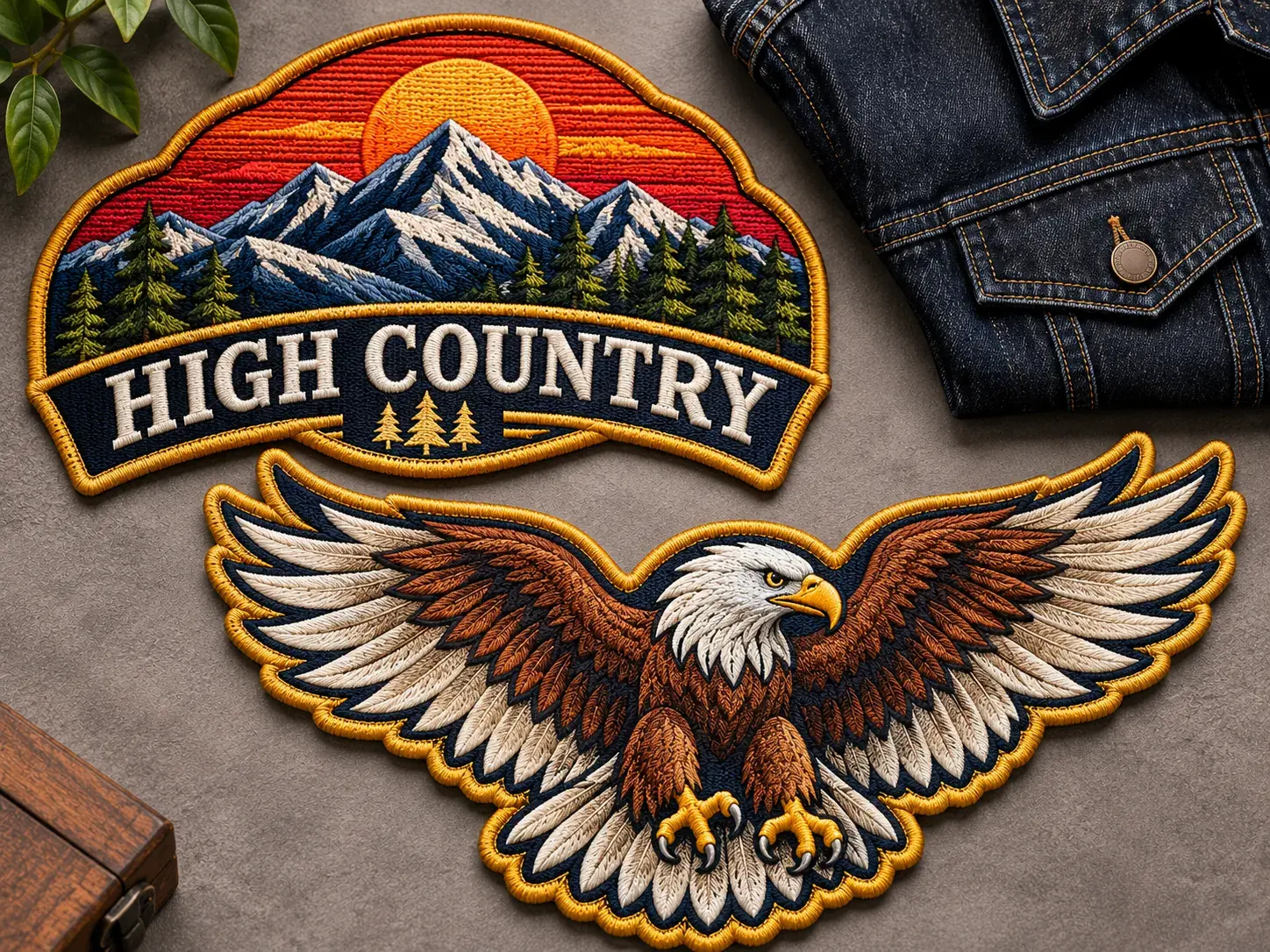
A merrowed edge wraps thread around simple shapes. A heat-cut edge follows detailed outlines with a sealed, stitched rim.
Backing
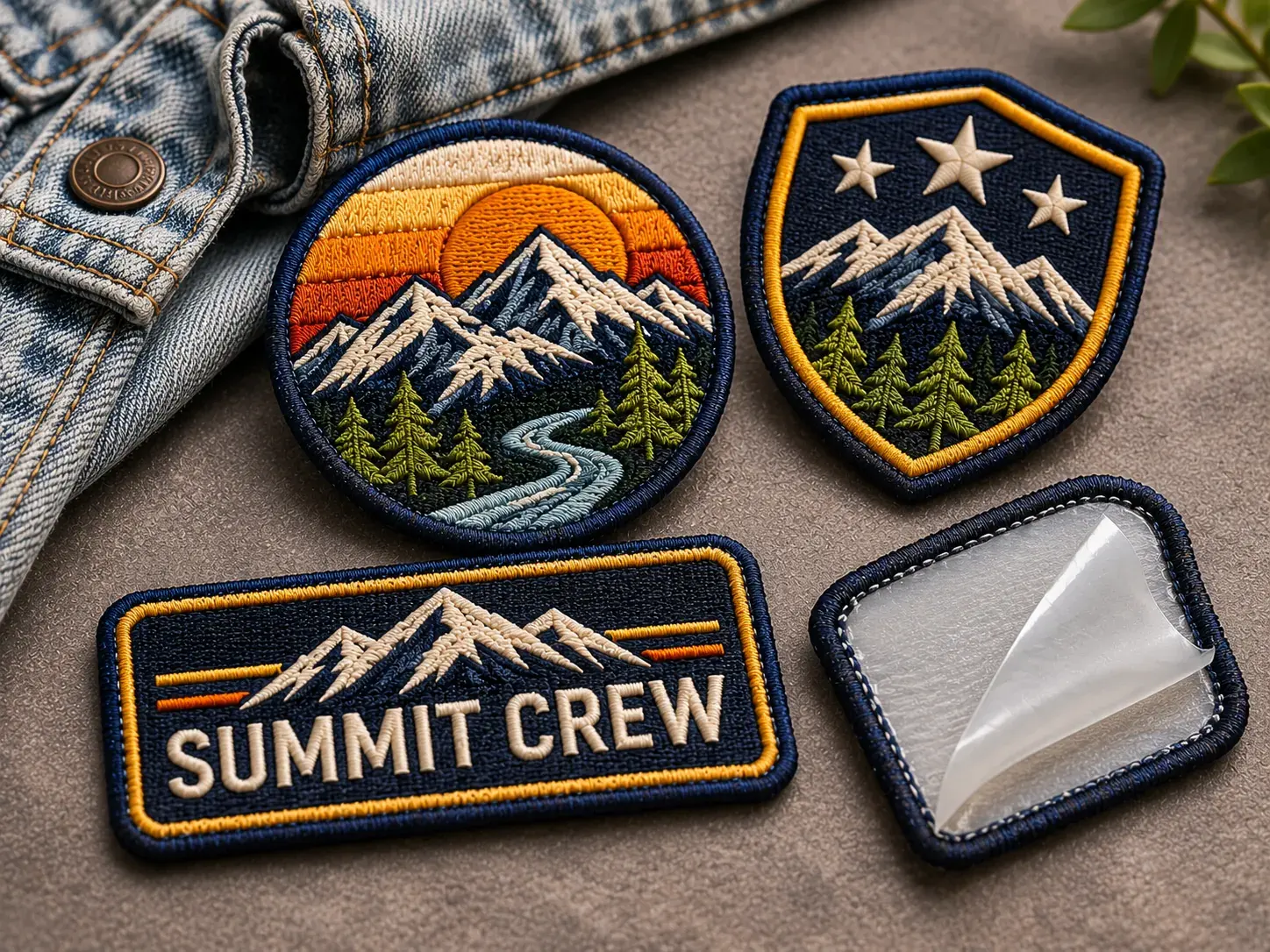
Pick sew-on, iron-on heat seal, hook-and-loop or peel-and-stick adhesive. Compare them in our patch backing types guide.
Choosing Stitch Coverage for Embroidered Badges
Stitch coverage is the share of the patch surface covered by thread. Lower coverage lets the twill color show through as part of the design. Higher coverage gives a fuller, richer embroidered badge.
| Coverage | What it looks like | Best for |
|---|---|---|
| 50% | Design stitched on a visible twill background | Simple logos and text on a solid color |
| 75% | Most of the surface stitched, some twill showing | Badges with a few open areas |
| 100% | Thread covers the entire face | Detailed artwork, gradients of color, premium badges |
Because more stitches mean more machine time, coverage also affects your quote. However, it is often worth it for detailed designs.
Where an Embroidered Patch Logo Works Best
Embroidery suits almost any fabric item that needs a lasting logo. For example, buyers order custom embroidered patches for:
- Department shoulder patches, such as custom police patches with exact color matching
- Front panels of caps and trucker hats, covered on our hat patch page
- Work uniforms, company jackets and name badges
- Scout, school and club awards
- Merch drops, collaboration patches and brand packaging
If your logo has very small text or fine lines, a woven patch may hold the detail better. Compare the two on our custom woven patches page.
How Ordering Custom Embroidered Patches Works
- 01
Send your artwork
Share a logo file, sketch or photo with the size, quantity and backing you have in mind.
- 02
We review and quote
Our team checks the design for stitch detail and replies with a price and any suggestions.
- 03
Approve your digital proof
You review a mockup with sizes and thread colors. Production starts only after you approve it.
- 04
Production and inspection
We stitch, border and back your patches, then inspect each batch.
- 05
Shipped to you
Your patches are packed and shipped to your US address with tracking.
Ready to start? Request a quote for embroidered patches and ask our team about quantities and timing for your project.
Quality Checks on Every Batch
Before packing, we compare finished custom embroidered patches against your approved proof. In addition, we check for loose threads, gaps in fill stitching and uneven borders. We also confirm that the backing is fully attached and the size matches your order.
Embroidered Patches: Frequently Asked Questions
What is the difference between an embroidered patch and an embroidered badge?
They are the same product. In the US, people usually say patch, while badge is common for uniforms, scouts and in British English. Both describe a stitched design on a fabric base.
What file should I send for custom embroidered patches?
Vector files such as AI, EPS, SVG or PDF work best. However, a clear PNG, JPG or even a sketch is fine to start. Our team can redraw it before digitizing.
Can embroidered patches show small text?
Yes, within limits. Thread has a physical width, so very small letters can blur together. As a rule, keep letters at least about a quarter inch tall, or consider a woven patch for finer detail.
What are 3D embroidered patches?
They are patches where foam sits under some satin stitches to raise those areas. The result is a puffed, textured look. It works best on bold letters and simple shapes.
Are embroidered patches and appliqués the same thing?
Not quite. An appliqué uses a cut piece of fabric stitched onto the base for some color areas. Many patches combine appliqué with regular embroidery to save stitches on large shapes.
How do I wash clothes with embroidered patches?
Turn the garment inside out and wash it in cold water on a gentle cycle. Then air dry or tumble dry on low. For iron-on patches, avoid high dryer heat, because it can soften the adhesive.