Guides
Types of Patches: A Complete Guide to Patch Styles and Materials
By the Nation Patches team · Updated · 6 min read
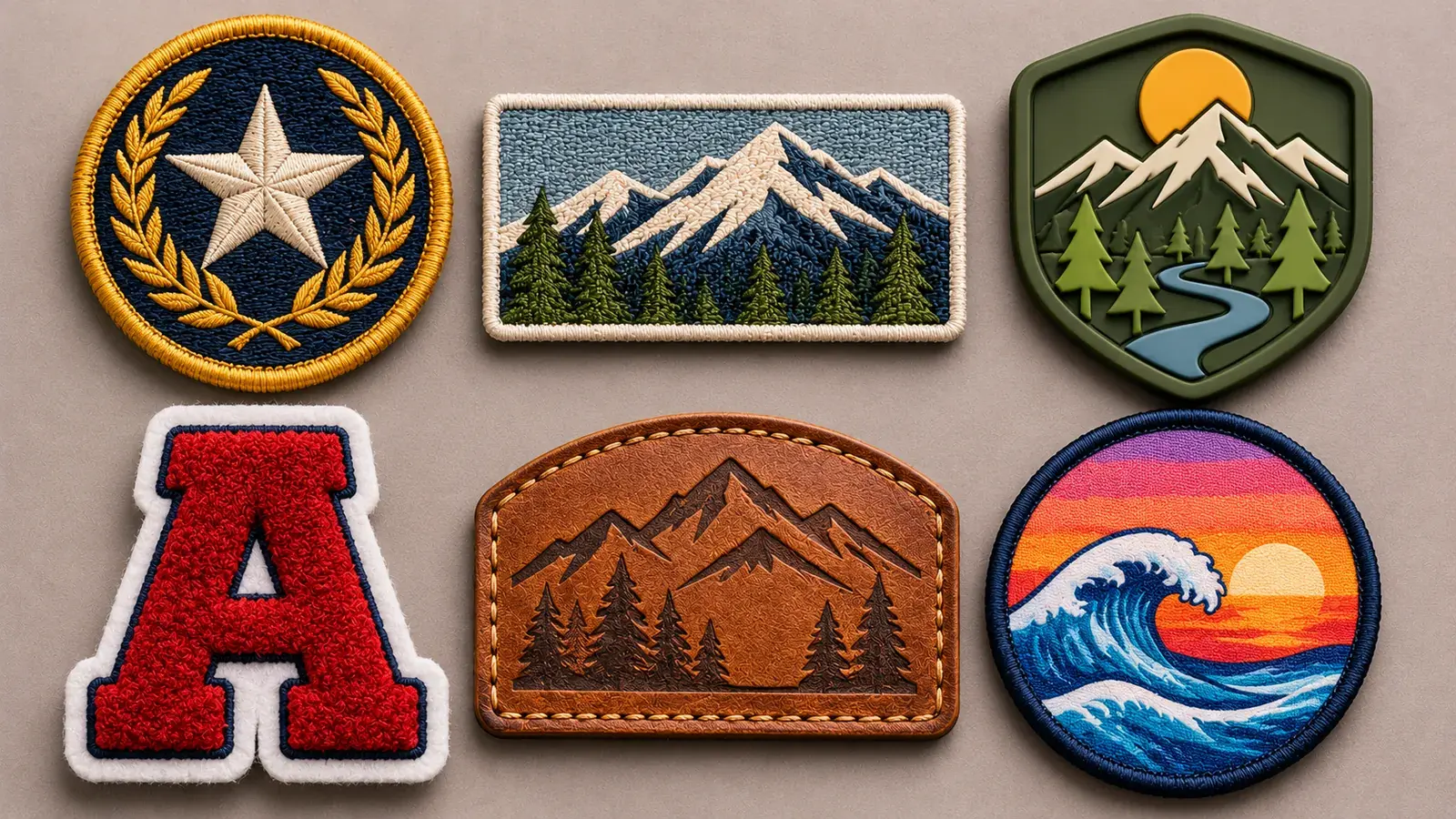
The main types of patches are embroidered, woven, PVC, chenille, leather, printed (sublimated) and bullion. Each one uses a different material and process, so each suits a different look and use. For example, embroidered patches give classic texture, while woven patches hold fine detail.
Below, we compare every style, explain the patch materials behind them and help you choose. If you're new to patches, start with the comparison table.
Types of Patches Compared
The table below compares seven types of patches side by side. Use it to narrow your options, then read the details for each style.
| Type | Made from | Detail level | Look and feel | Best for |
|---|---|---|---|---|
| Embroidered | Thread on twill | Medium | Raised, textured | Uniforms, teams, brands |
| Woven | Fine damask thread | High | Thin, flat, smooth | Apparel labels, hats, small text |
| PVC | Soft molded PVC | Medium to high | Rubbery, raised 3D | Tactical gear, outdoor use |
| Chenille | Loop yarn on felt | Low | Fuzzy, soft, thick | Varsity jackets, schools |
| Leather | Genuine or faux leather | Medium | Rugged, premium | Hats, denim, bags |
| Printed or sublimated | Ink dyed into polyester | Very high | Flat, full color | Photos, gradients, events |
| Bullion | Metallic wire thread on fabric | Medium | Raised, shiny, formal | Blazers, crests, ceremonies |
Embroidered Patches
Embroidered patches are the classic style. Colored thread is stitched onto a polyester twill base by multi-head machines. Stitch coverage ranges from about 50% to 100%. At lower coverage, the twill shows through as the background.
Embroidery gives a raised, textured look that wears well. In addition, 3D puff embroidery adds foam under the stitches for extra height. Learn more about custom embroidered patches and their border and backing options.
Woven Patches
Woven patches are made on a loom with thin damask threads. The design and background are woven together, so the patch is flat, thin and smooth. Because the threads are finer, woven patches hold small text and fine lines better than embroidery.
That makes them a strong choice for clothing labels, hat patches and detailed logos. See our woven patches page for more.
PVC Patches
PVC patches are molded from soft, flexible polyvinyl chloride. Each color is filled into a metal mold and cured with heat. Designs can be 2D, with flat stepped layers, or 3D, with sculpted shapes.
PVC resists water and keeps its shape, so it's popular on tactical gear, backpacks and outdoor equipment. Most PVC patches use hook-and-loop backing. Explore custom PVC patches for 2D and 3D options.
Chenille Patches
Chenille patches use thick loop yarn stitched onto felt. The loops create a soft, fuzzy surface, and stacked felt layers frame the design. Chain stitch or regular embroidery often adds outlines and small details.
Chenille is the go-to style for letterman jackets, school letters and team names. However, it needs large, simple shapes. Our chenille patches page covers sizes and felt colors.
Leather Patches
Leather patches come in genuine or faux leather. The design is either debossed with a heated metal die or laser engraved. Debossing presses the logo into the surface, while laser engraving burns it in for a darker contrast.
Leather has a rugged, premium feel. That's why it's common on hats, denim jackets and bags. Visit our leather patches page to compare finishes.
Printed, Sublimated and Bullion Patches
Printed and sublimated patches
Sublimated patches use heat to dye ink into polyester fabric. As a result, they can show photos, gradients and unlimited colors that thread can't match. The surface is flat, and the edge is usually finished with a merrowed or stitched border.
Bullion patches
Bullion patches are hand embroidered with coiled metallic wire, often in gold or silver tones. The wire is usually stitched onto velvet or a similar fabric. They look formal and shiny, so they suit blazer crests, ceremonial uniforms and heritage badges. Ask our team if you need a bullion style.
Patch Material Guide: Twill, Felt and Thread Types
Every one of these types of patches starts with a base material. The patch material affects how it looks, feels and lasts. Here are the materials you'll see most often.
Polyester twill
The standard fabric for embroidery patches. Its tight diagonal weave holds stitches firmly and resists fraying.
Felt
A soft, non-woven fabric used for chenille patches and many handmade patches. It doesn't fray when cut.
Polyester thread
Strong and colorfast. It stands up well to washing and sunlight, so it suits uniforms and workwear.
Rayon thread
Has a brighter sheen than polyester. It looks rich, but it's less durable under heavy washing or bleach.
Metallic thread
Adds gold, silver or other shiny accents. It works best in small areas, since it's stiffer to stitch.
Specialty threads
Glow-in-the-dark and reflective threads add visibility. Ask our team what fits your patch type.
If you embroider at home, you'll also see blank patches. These are pre-cut twill or felt shapes with a finished border. You stitch your own design in the center, which makes machine embroidery patches easier for beginners. Blank patches also come in iron-on versions, and blank leather patches are popular for hats.
Borders and Backings Across Patch Types
The patch type is only part of the decision. Borders and backings also change how a patch looks and attaches. Here's how they usually pair up.
Borders
Embroidered, woven and sublimated patches can use a merrowed border on simple shapes. For custom outlines, they use a heat-cut or laser-cut edge instead. PVC patches don't need a stitched border, because the mold forms a clean edge. Chenille patches usually show a felt edge, and leather patches have a cut or stitched edge.
Backings
Thread-based patches work with iron-on, sew-on, hook-and-loop or adhesive backing. On the other hand, PVC and leather don't bond well with iron-on glue under household heat. So they're usually sewn on or fitted with hook-and-loop. Our guide to patch backing types covers the details.
How to Choose Between Different Types of Patches
To choose between types of patches, start with your design. Then think about where the patch will live. These quick matches cover most projects.
- Bold logo for uniforms or teams: embroidered.
- Tiny text or fine detail: woven.
- Outdoor, wet or tactical use: PVC.
- Varsity or school letters: chenille.
- Hats with a rugged, premium feel: leather.
- Photos or gradients: printed or sublimated.
- Formal crests and ceremonial dress: bullion.
Still unsure? Send your artwork for a quote, and our team will recommend a patch type. You'll then approve a digital proof before production starts.
Frequently Asked Questions
What is the most popular type of patch?
Embroidered patches are the most widely used. They suit uniforms, teams, brands and clubs, and they work with every common backing, from iron-on to hook-and-loop.
What is the difference between embroidered and woven patches?
Embroidered patches stitch thread on top of twill, which creates a raised texture. Woven patches weave the whole design from thinner threads. As a result, woven patches are flatter and hold finer detail.
What material are patches made of?
Most embroidered patches use polyester twill with polyester or rayon thread. Chenille patches use loop yarn on felt. Other types use PVC, leather or printed polyester.
Which type of patch lasts the longest?
PVC patches resist water, fading and abrasion very well. Embroidered patches with polyester thread and a merrowed border are also very durable. Care matters too, so wash gently and avoid high dryer heat.
Can one patch combine two types?
Yes, hybrid patches are common. For example, chenille patches often include embroidered details, and woven patches can carry embroidered accents. Ask our team whether a mix suits your design.